Mauritius Underwater Waterfall Tour Helicopter Flights & Seaplane Views
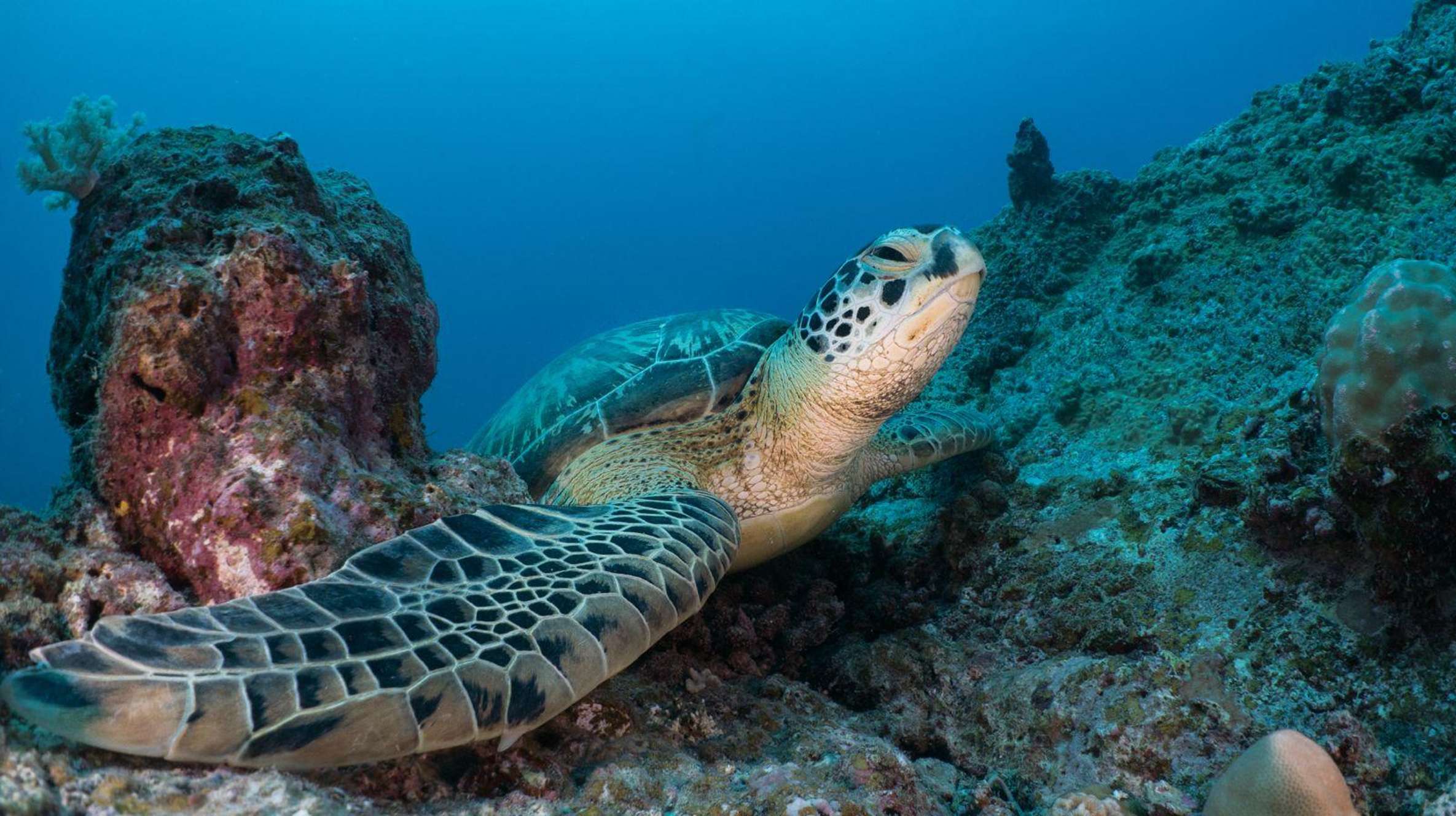
See the famous underwater falls the only way they exist, from the air, then go deeper for real. Book a passenger submarine off Trou-aux-Biches and drop 35 meters in a dry, air-conditioned cabin to coral reefs, sea turtles and the Star Hope shipwreck, all through your own window. Over 200 divers have made the descent. Reserve your seat today.
The underwater waterfall off Le Morne is an optical illusion, sand washing down an ocean trench, and it only reads as a waterfall from the air. Seeing it means a scenic flight over the southwest coast, which runs outside the tours on this page.
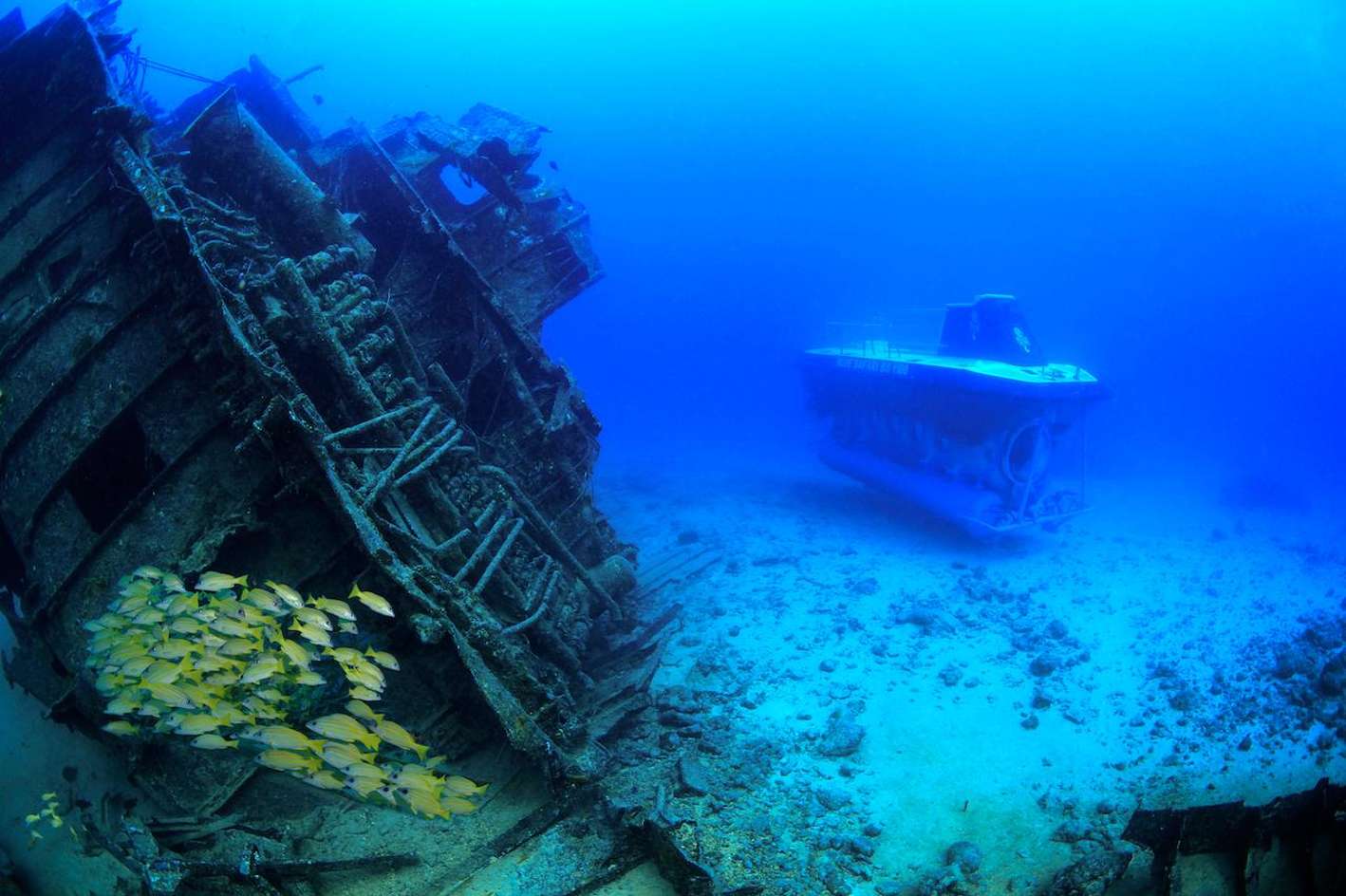
The closest experience sold here goes straight under the surface instead. The Trou-aux-Biches submarine tour dives 35 meters down to the Star Hope shipwreck on a 40-minute descent, with coral reefs and tropical fish past your own observation window, all from a dry, air-conditioned cabin.
Our pickLikely to sell out
2 hours·English, French
4.7(204)
Trou-aux-Biches: Submarine Tour to the Star Hope Wreck
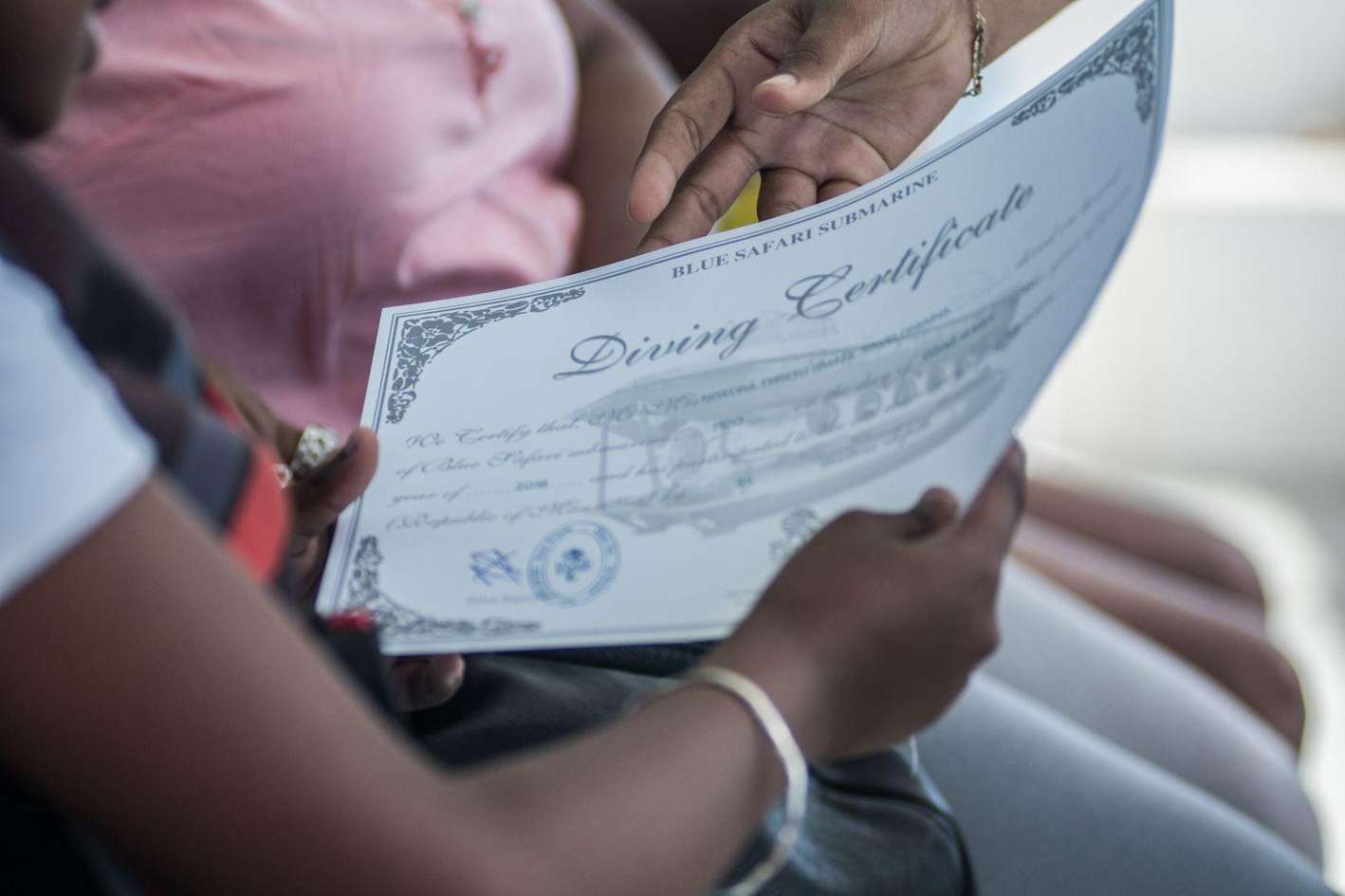
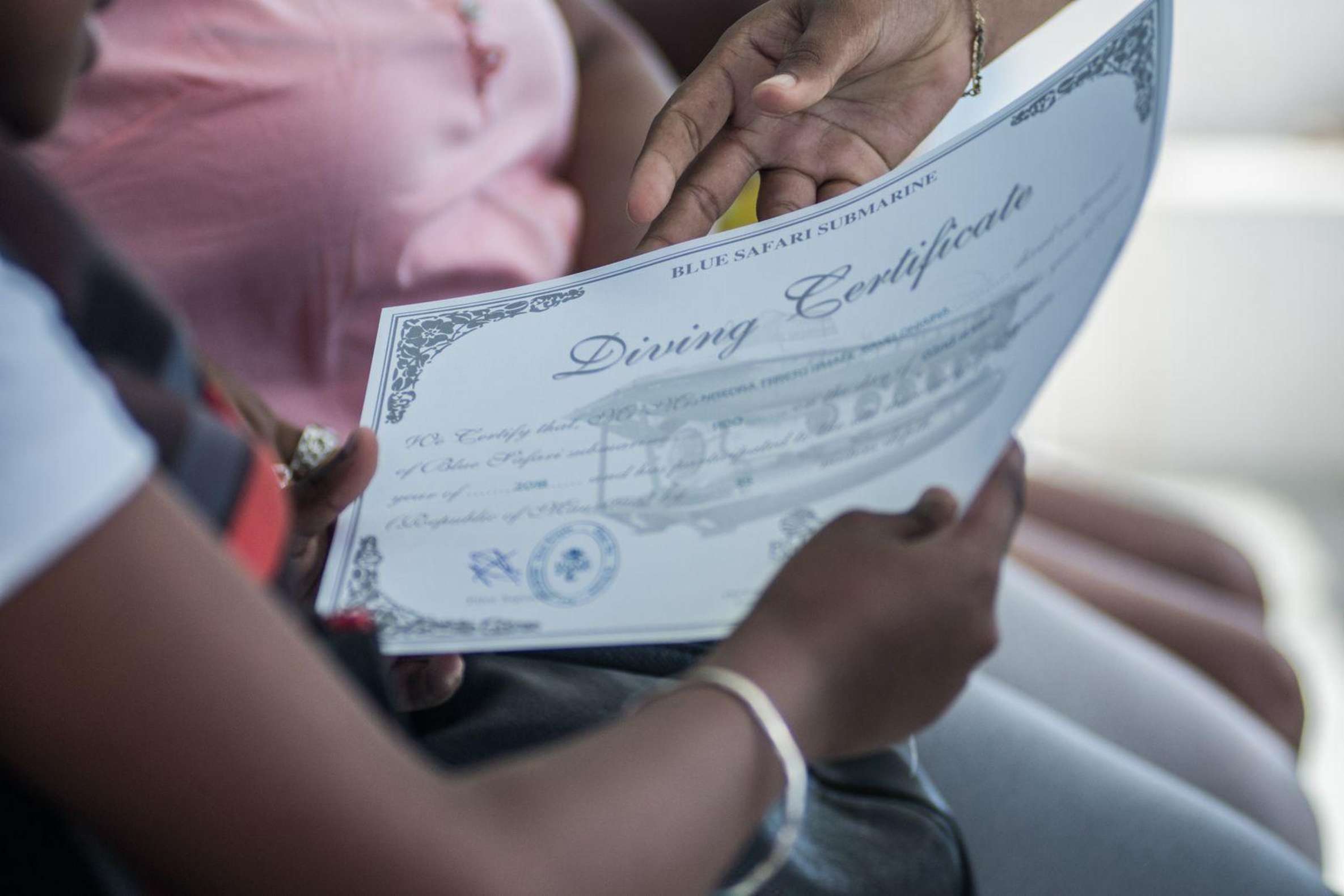
Free cancellation40-minute dive in a submarine at 35 metersCertificate for diving in a submarine
Closest to a Mauritius underwater waterfall tour - A submarine dive below
The underwater waterfall off Le Morne shows itself only from the sky. At sea level the water looks ordinary, and swimming or boating over that channel is unsafe because heavy swells push strong rip currents through it.
No aerial flight is bookable here. What is on sale, and well worth the morning, is a real submarine dive.
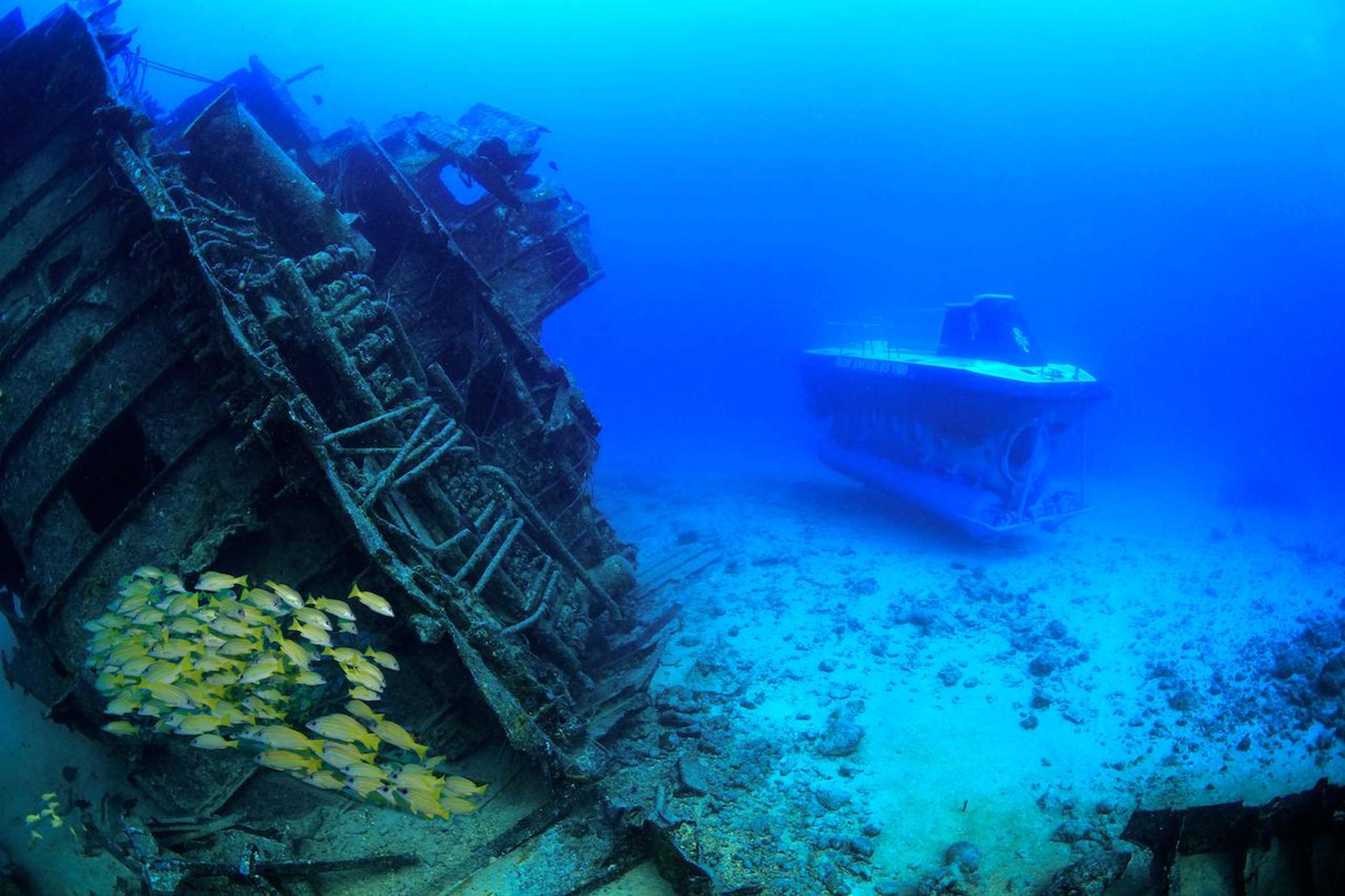
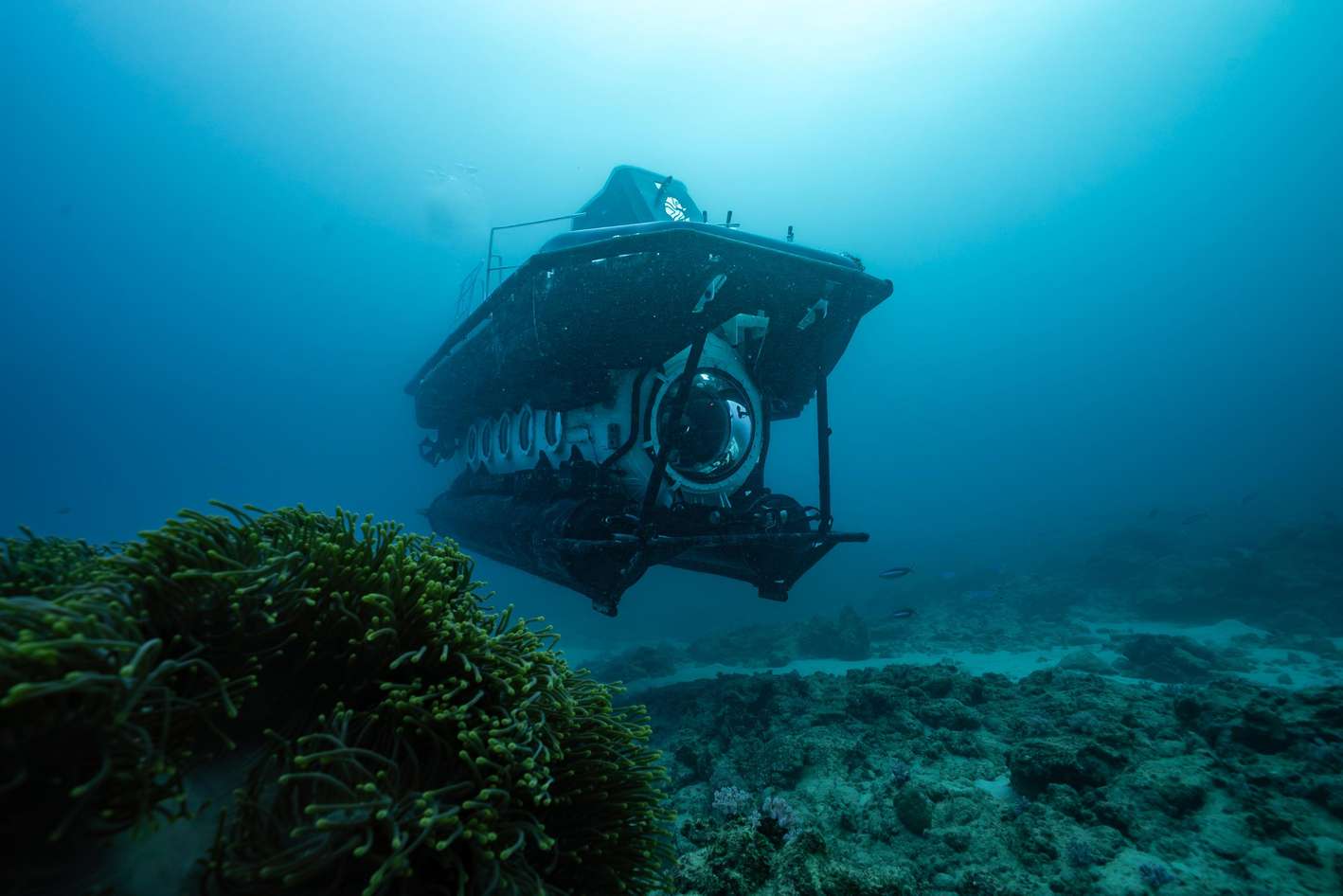
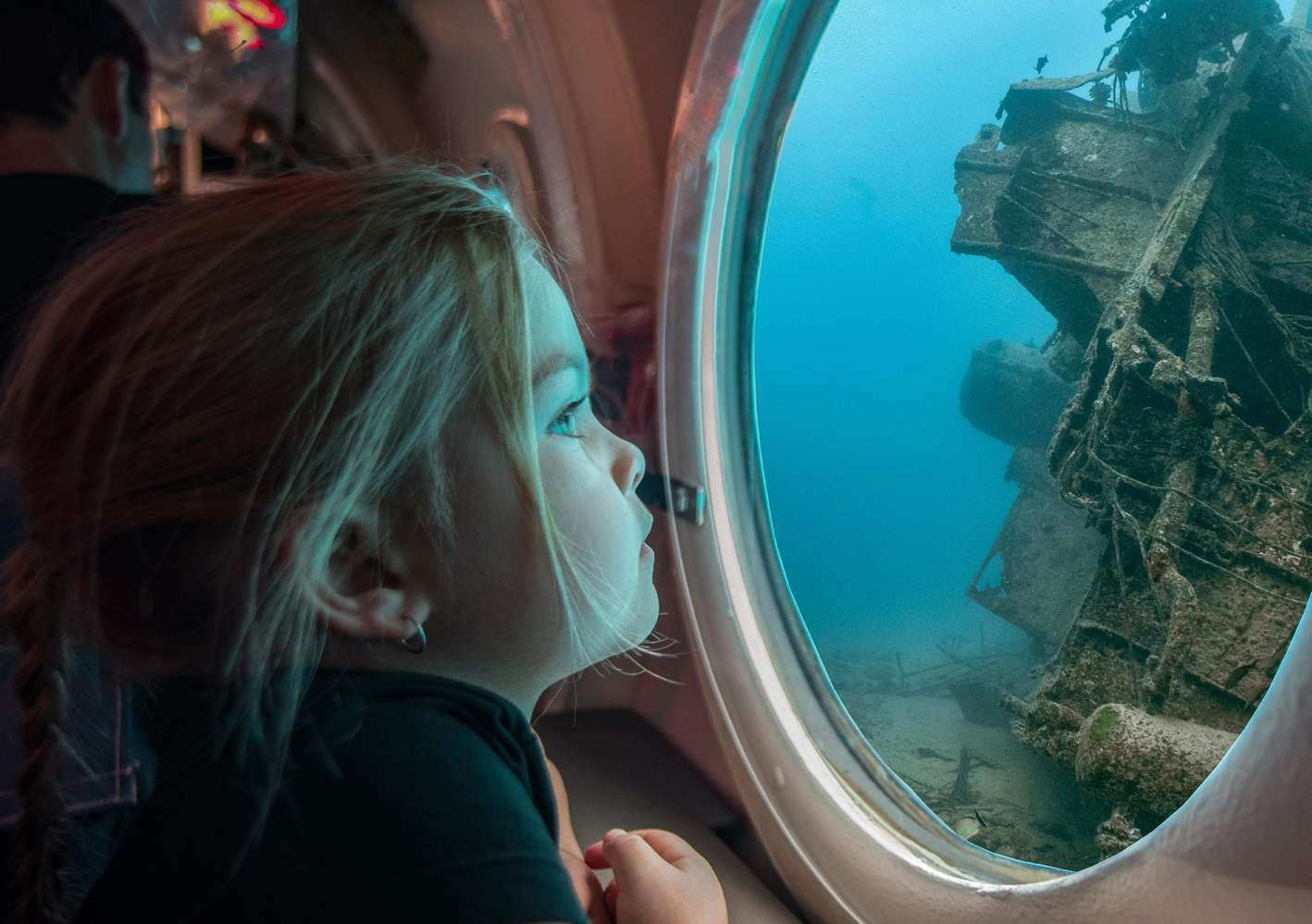
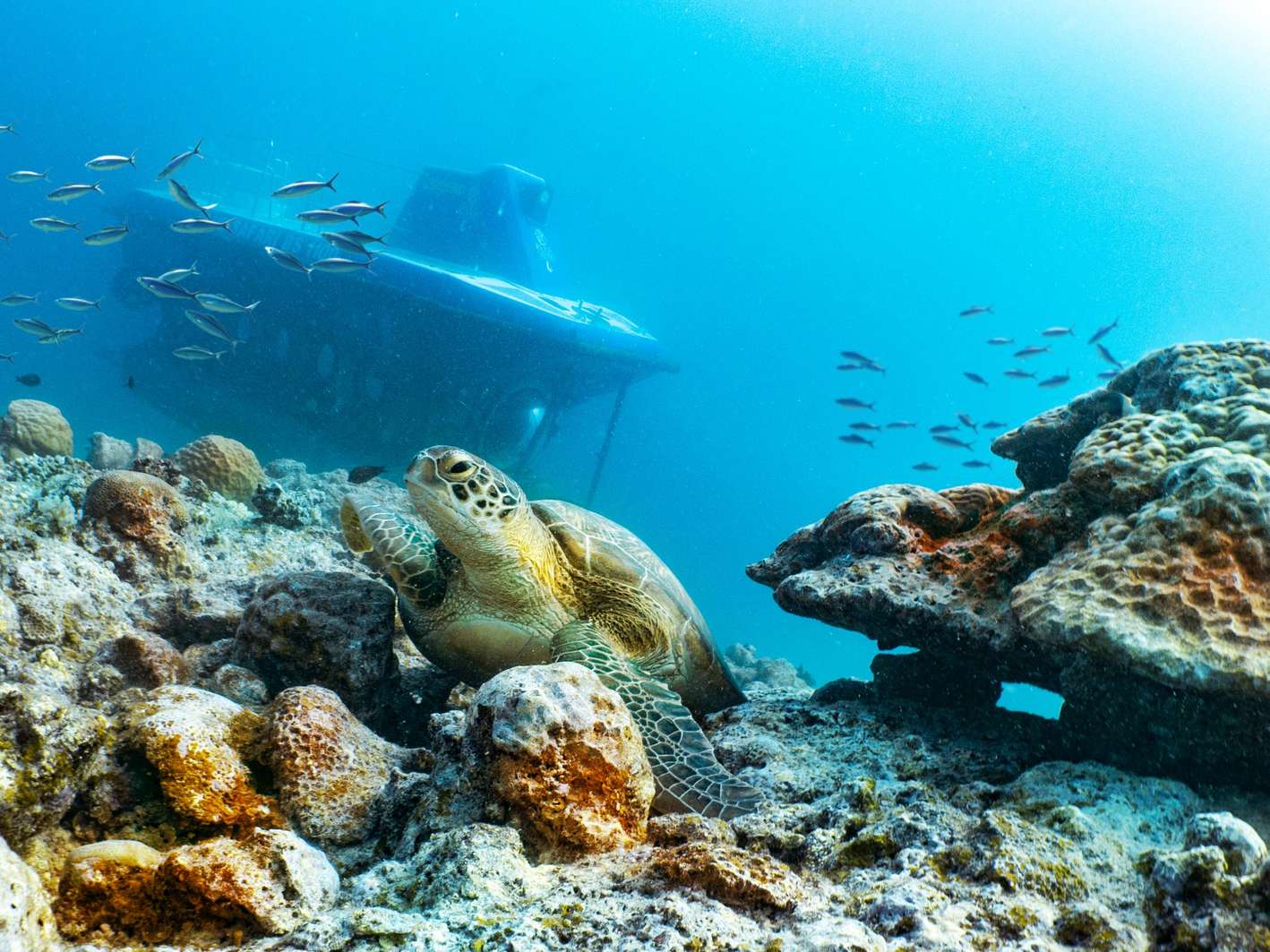
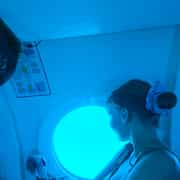
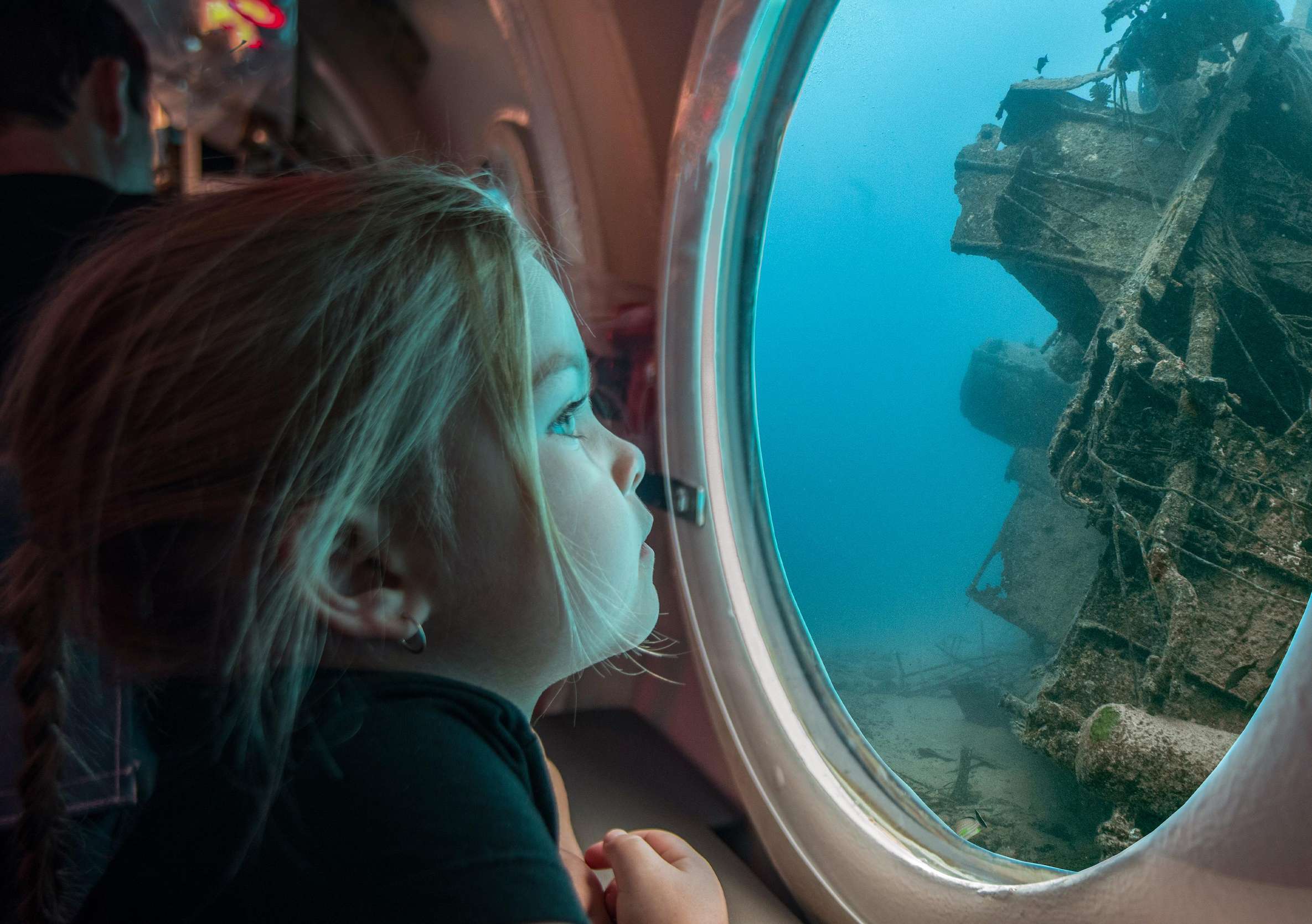
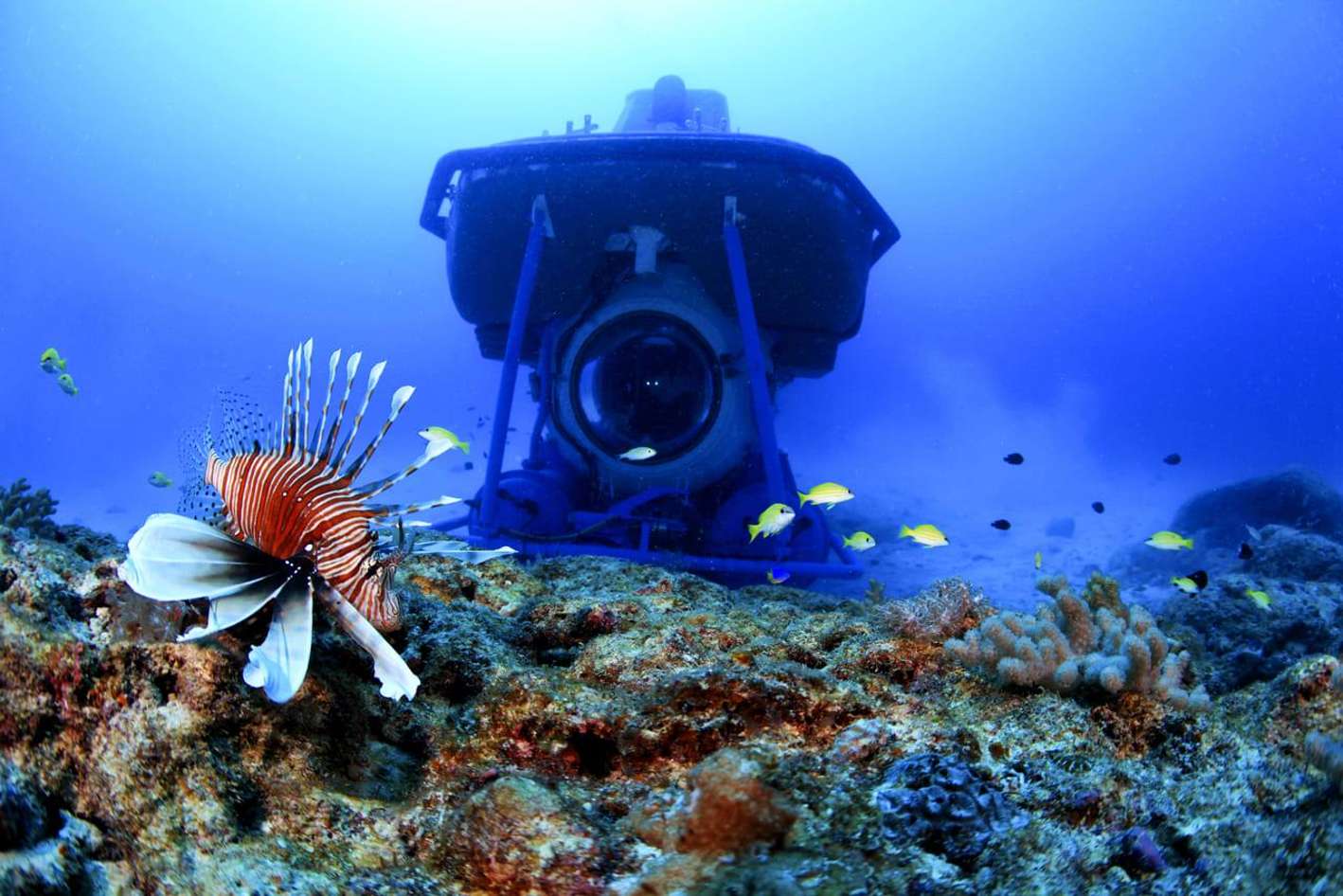
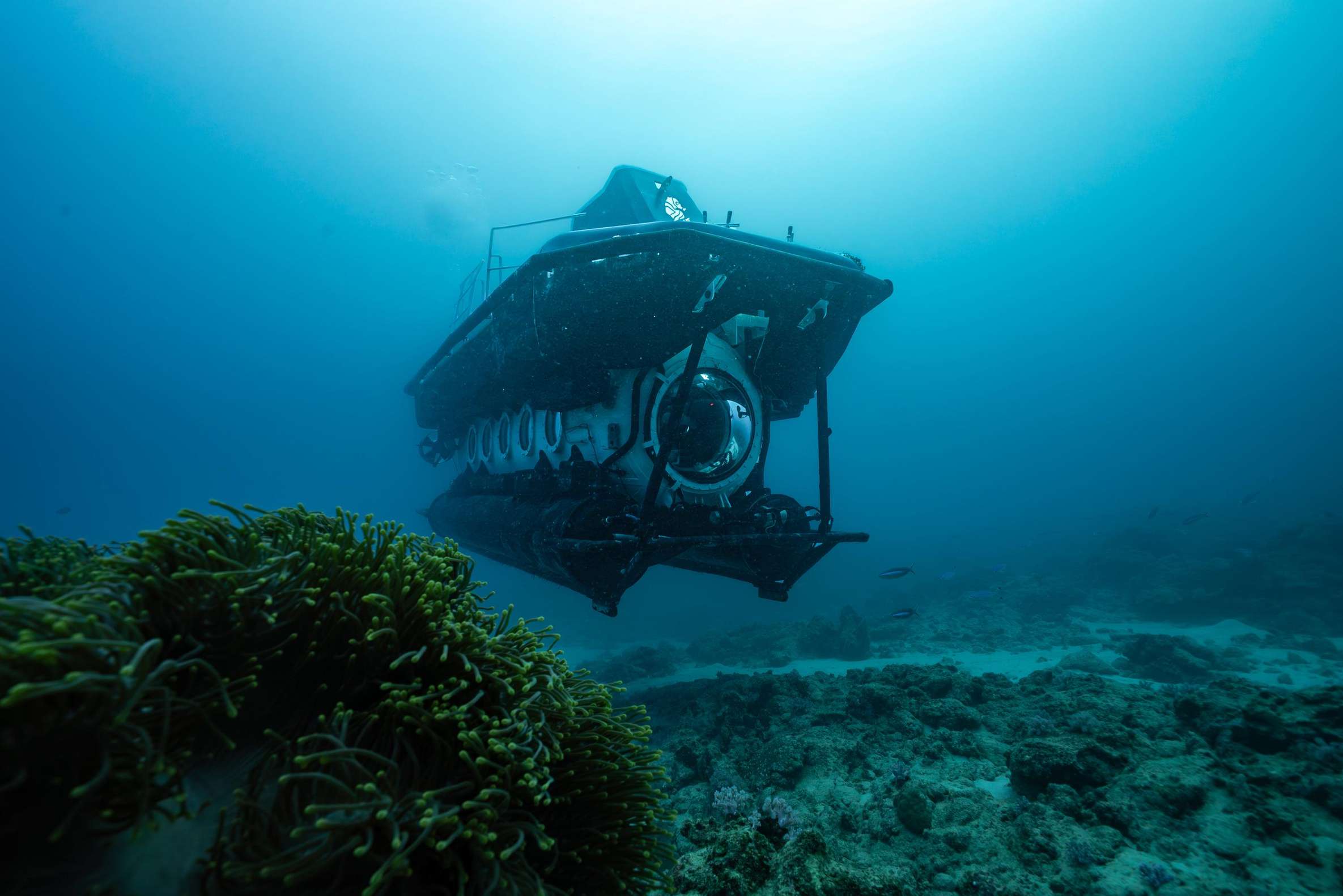
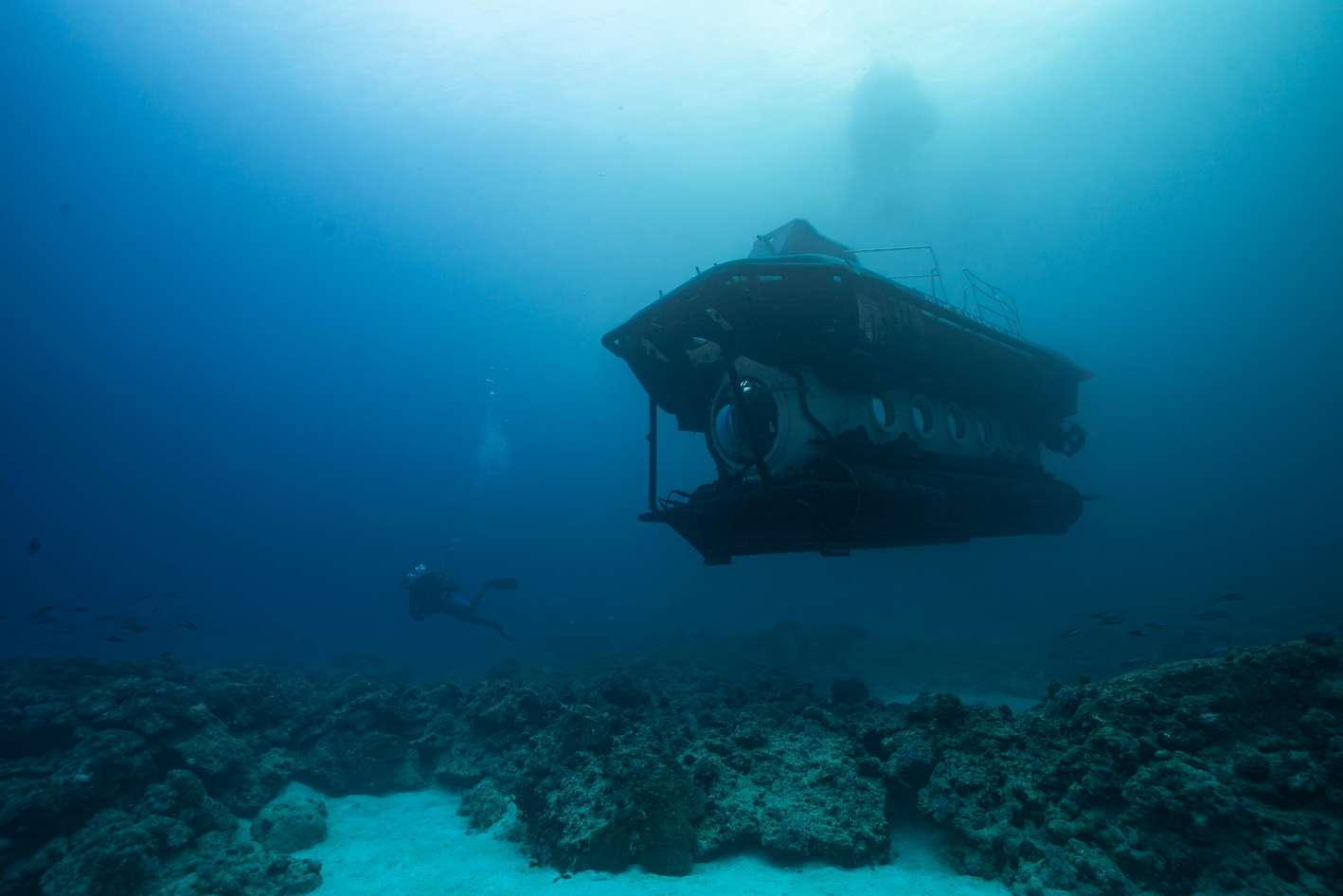
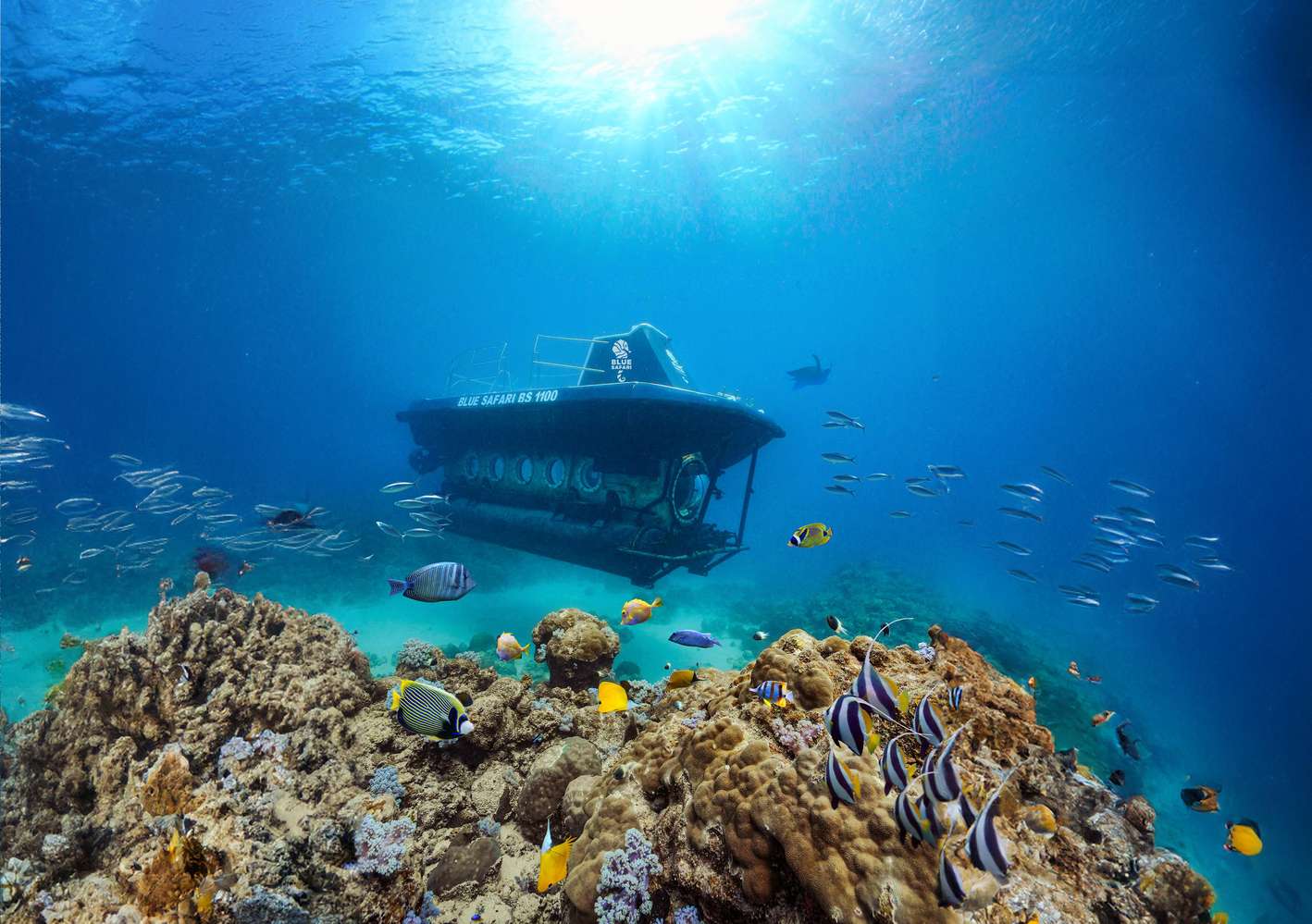
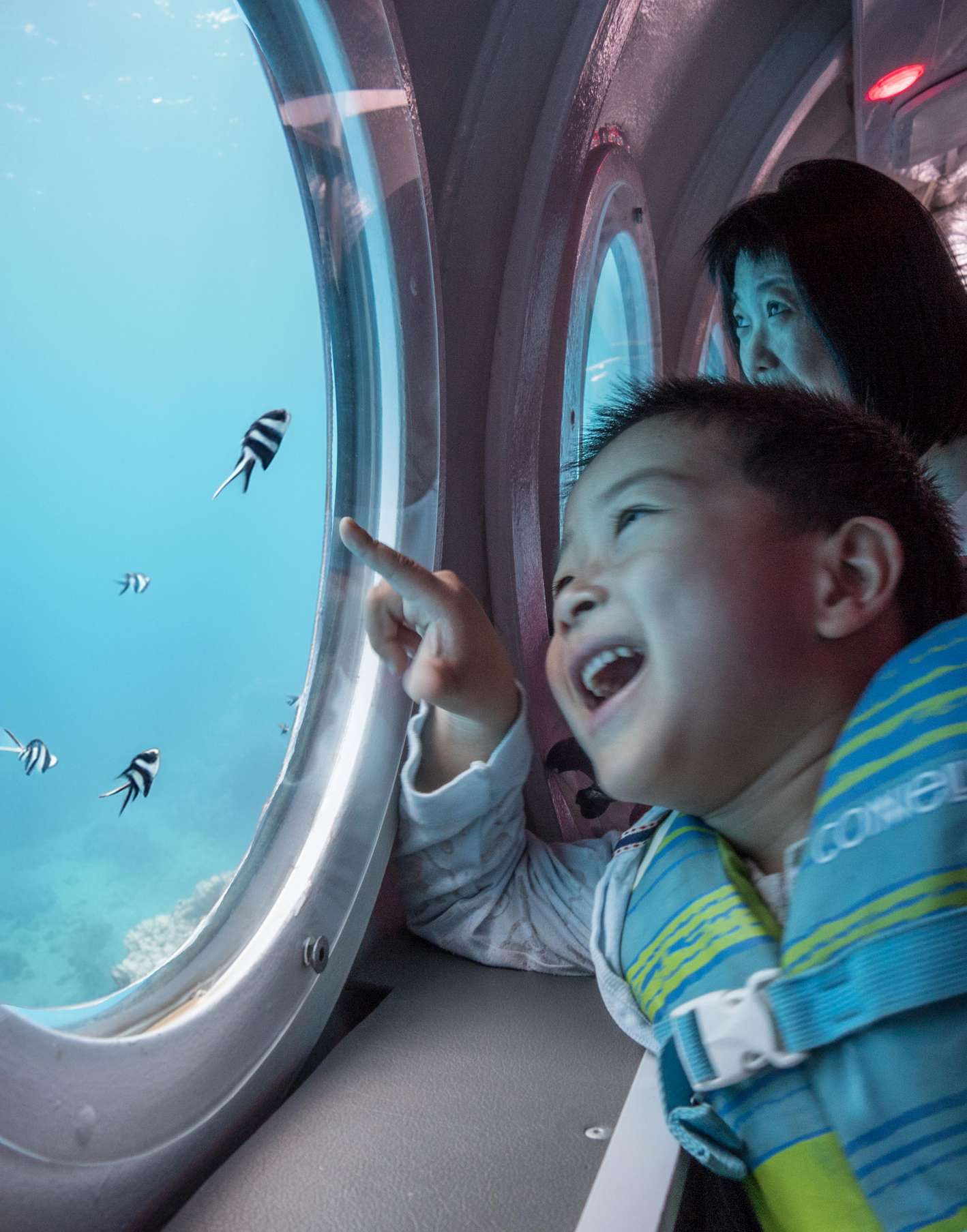
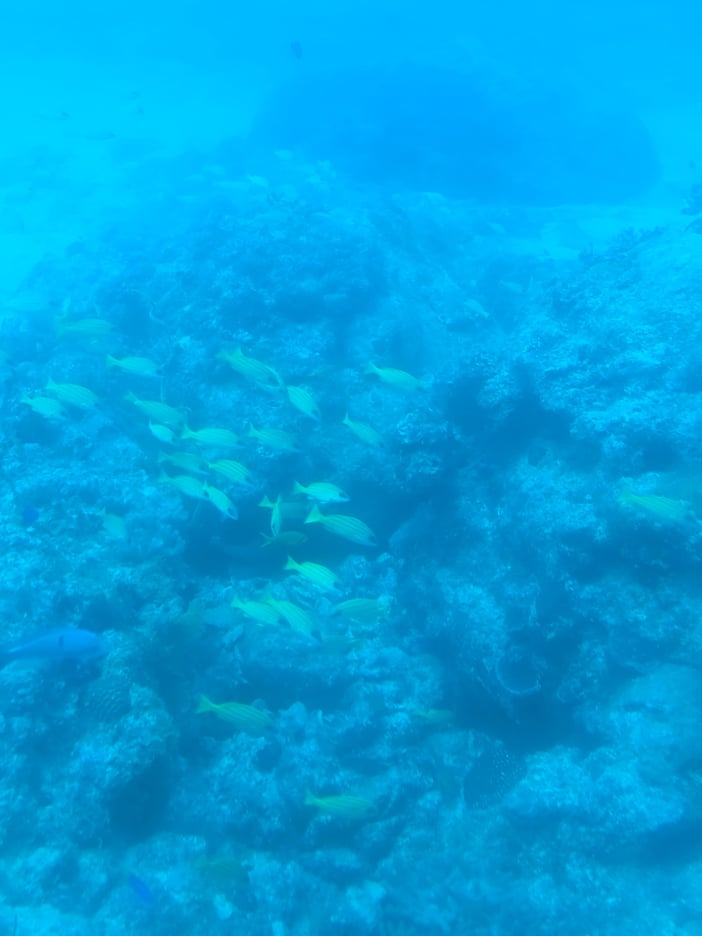
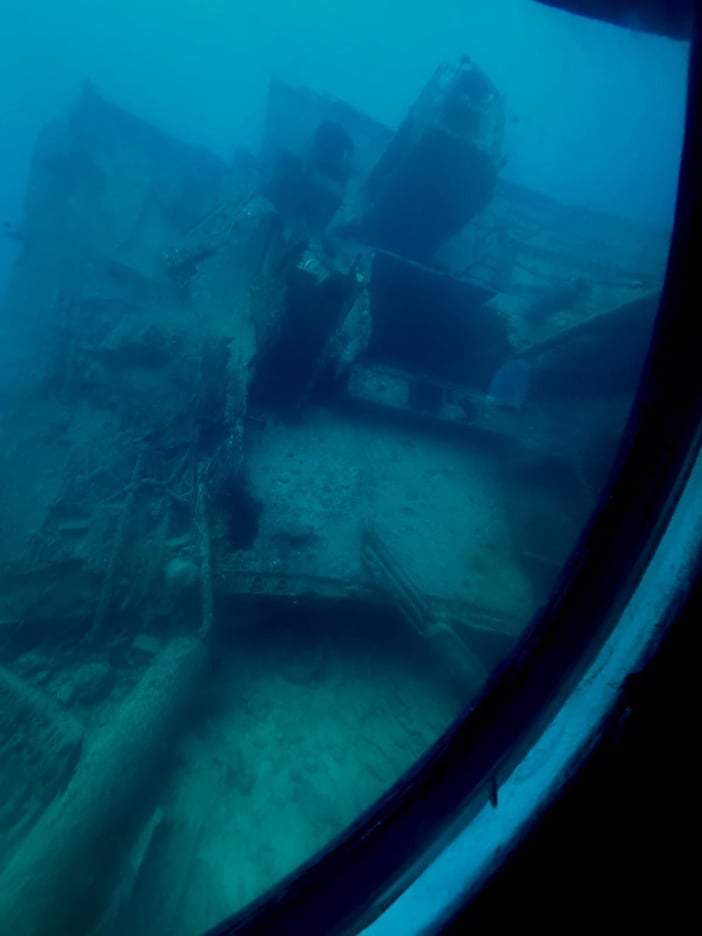
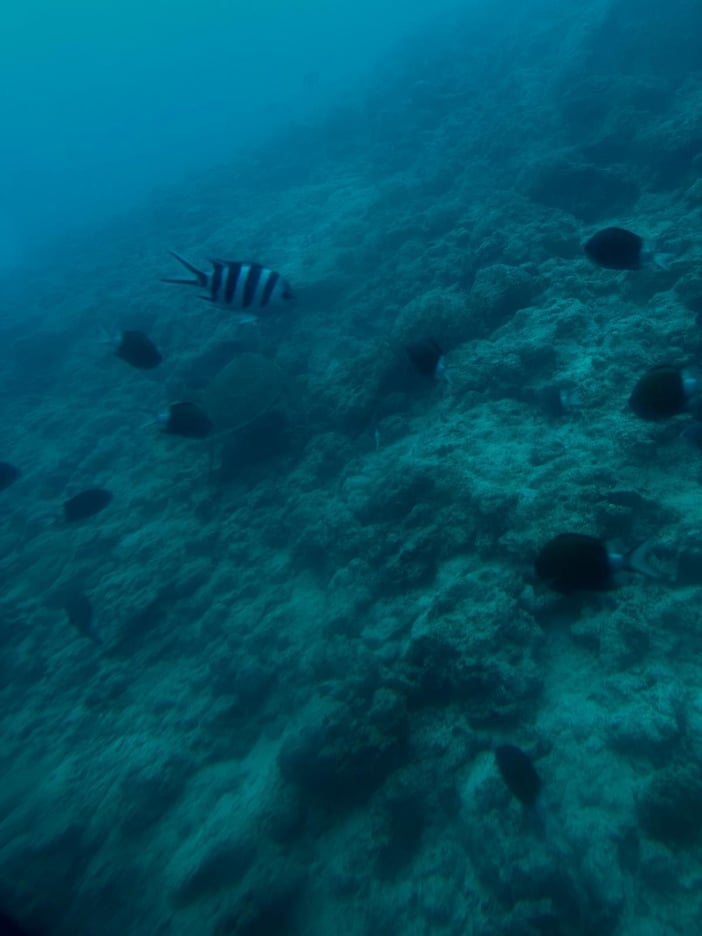
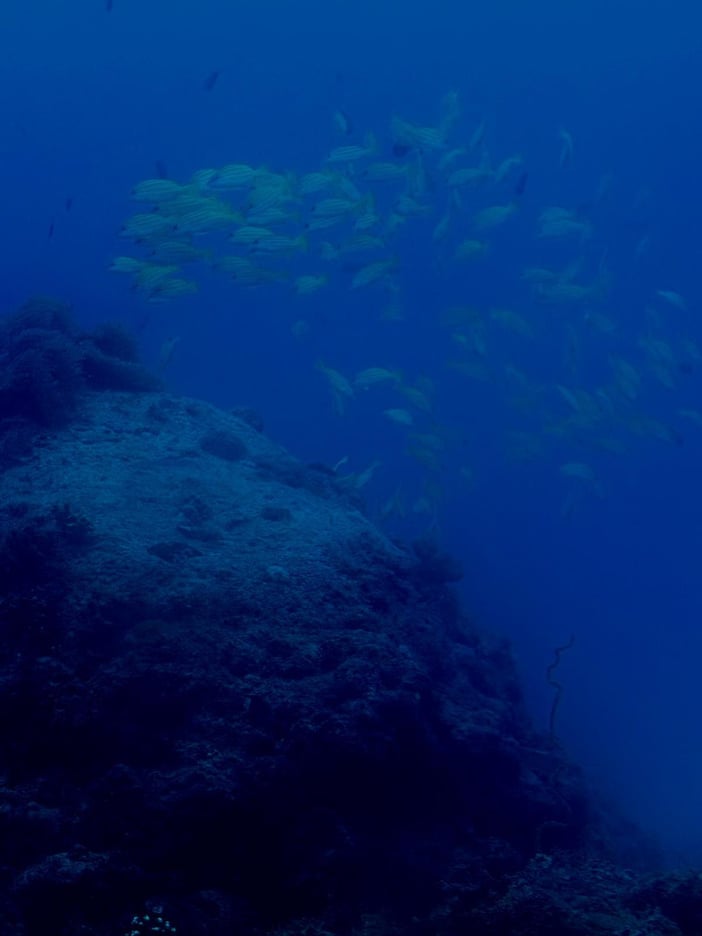
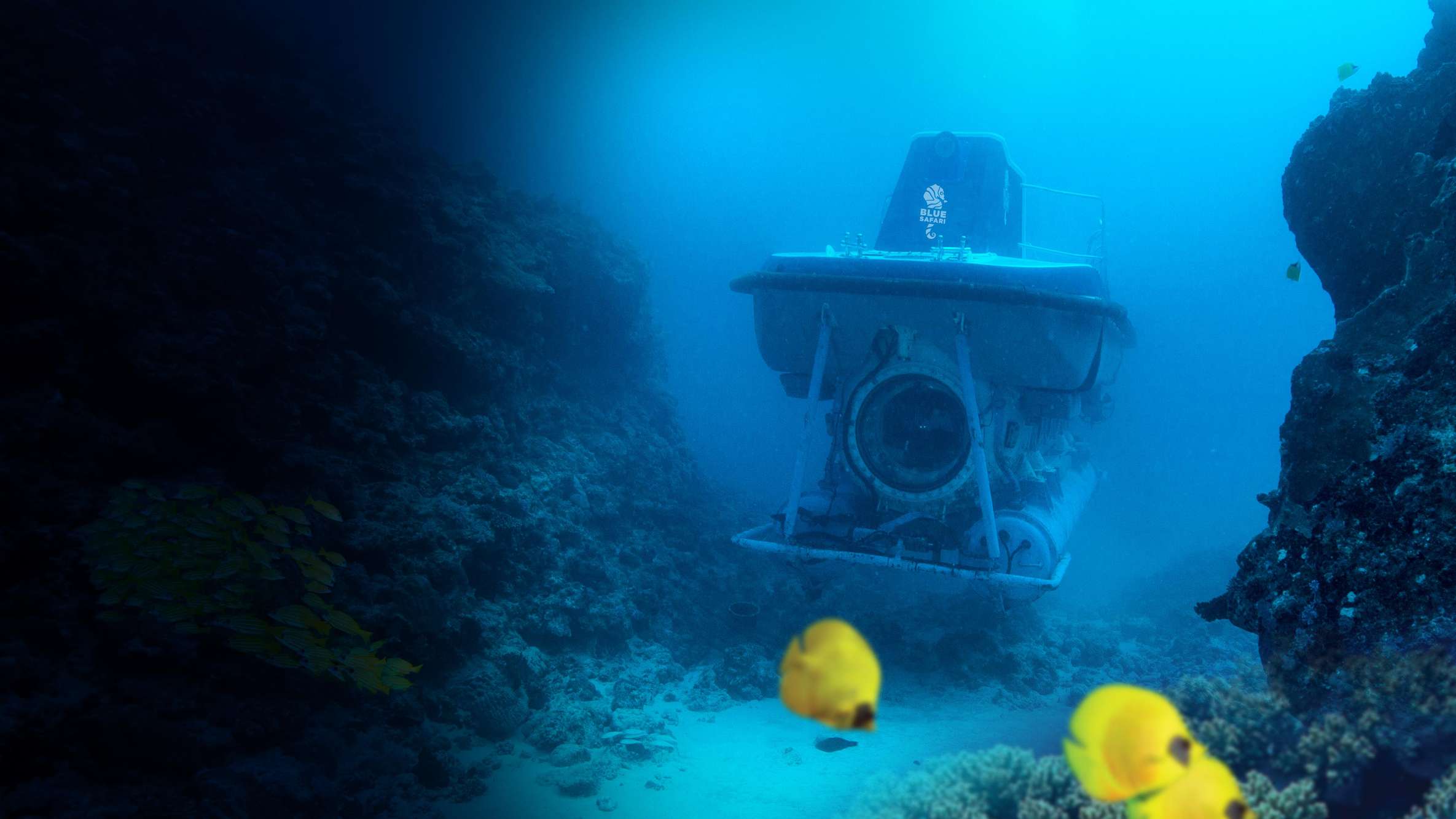
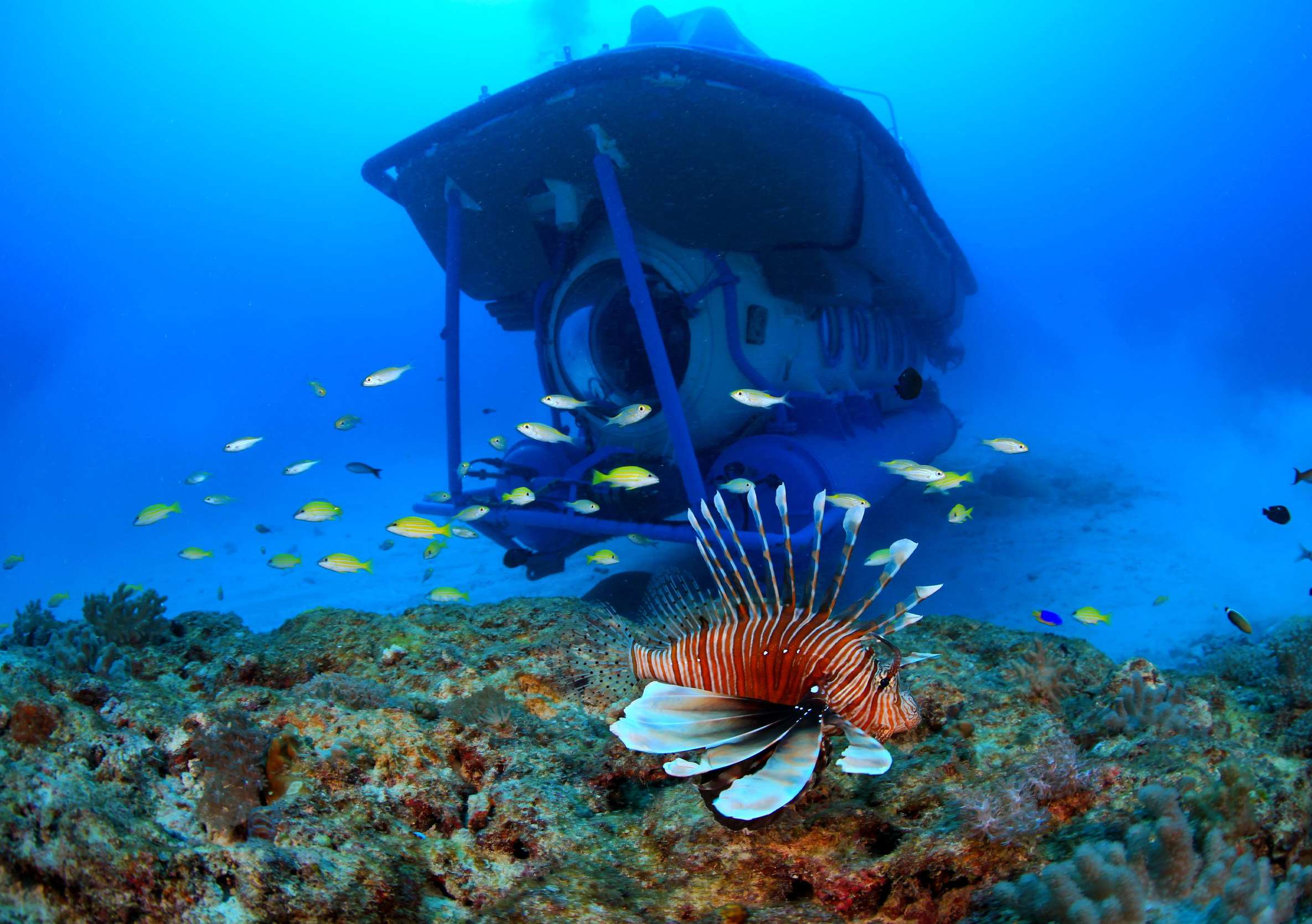
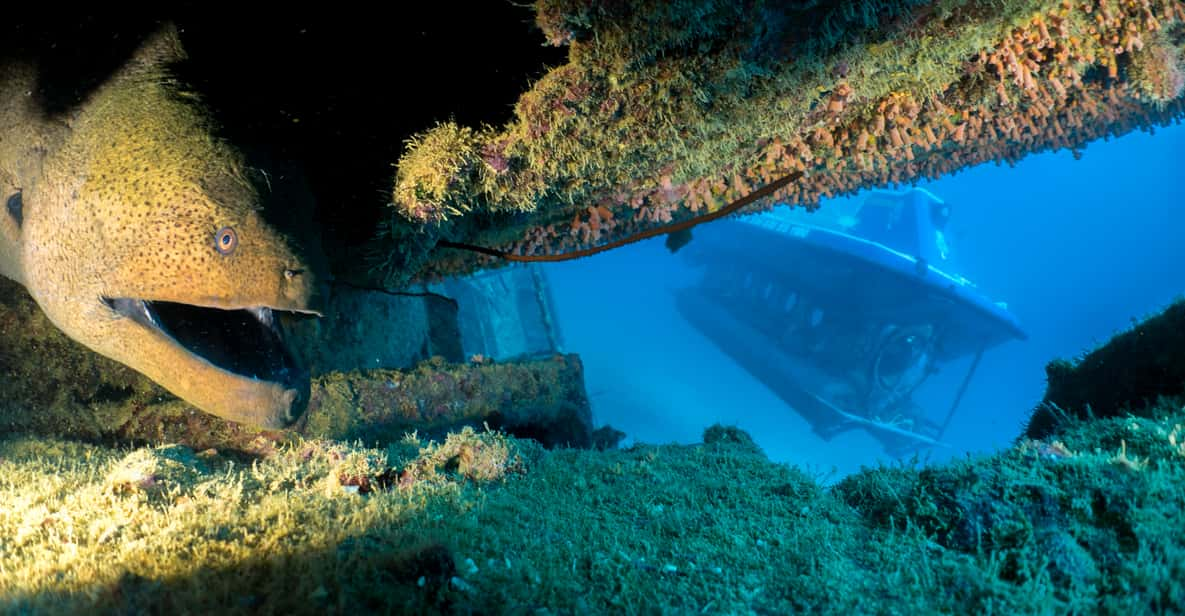
Trou-aux-Biches: Submarine Tour to the Star Hope Wreck takes you 35 meters down in a genuine passenger submarine for a 40-minute dive. From your own observation window you watch coral reefs, surgeonfish and kingfish drifting past, the Star Hope shipwreck on the seabed and a 17th-century sheet anchor beside it.
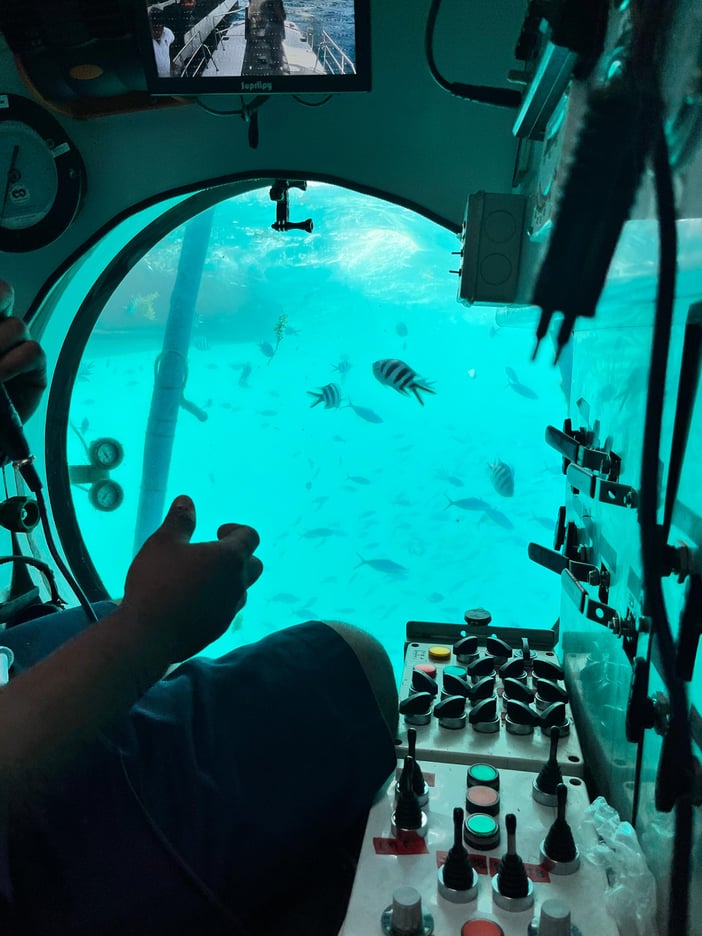
The cabin stays air-conditioned and completely dry, no diving experience is needed, and you leave with a personal dive certificate and an iced tea.
The honest gap: this runs underwater in the north of the island, so you see no aerial panorama and no sand cascade. What you get in return is two hours from check-in to return, and a wreck at 35 meters no aircraft can show you.
It suits independent travelers staying near Trou-aux-Biches or arriving by rental car, since hotel pickup is not included. One thing to know before you book: you climb down a two-meter ladder into the hatch, so wear flat shoes.
At a glance
Duration 2 hours4.7 from 204 reviewsFree cancellation
What your dive shows you instead of the underwater waterfall
about 2 h
Thirty-five meters down off Trou-aux-Biches, the seabed gives you what no aerial photo of the underwater waterfall can: surgeonfish, kingfish and capitaine drifting past your observation window, coral gardens, and the Star Hope shipwreck lying on the sand with a 17th-century sheet anchor beside it.
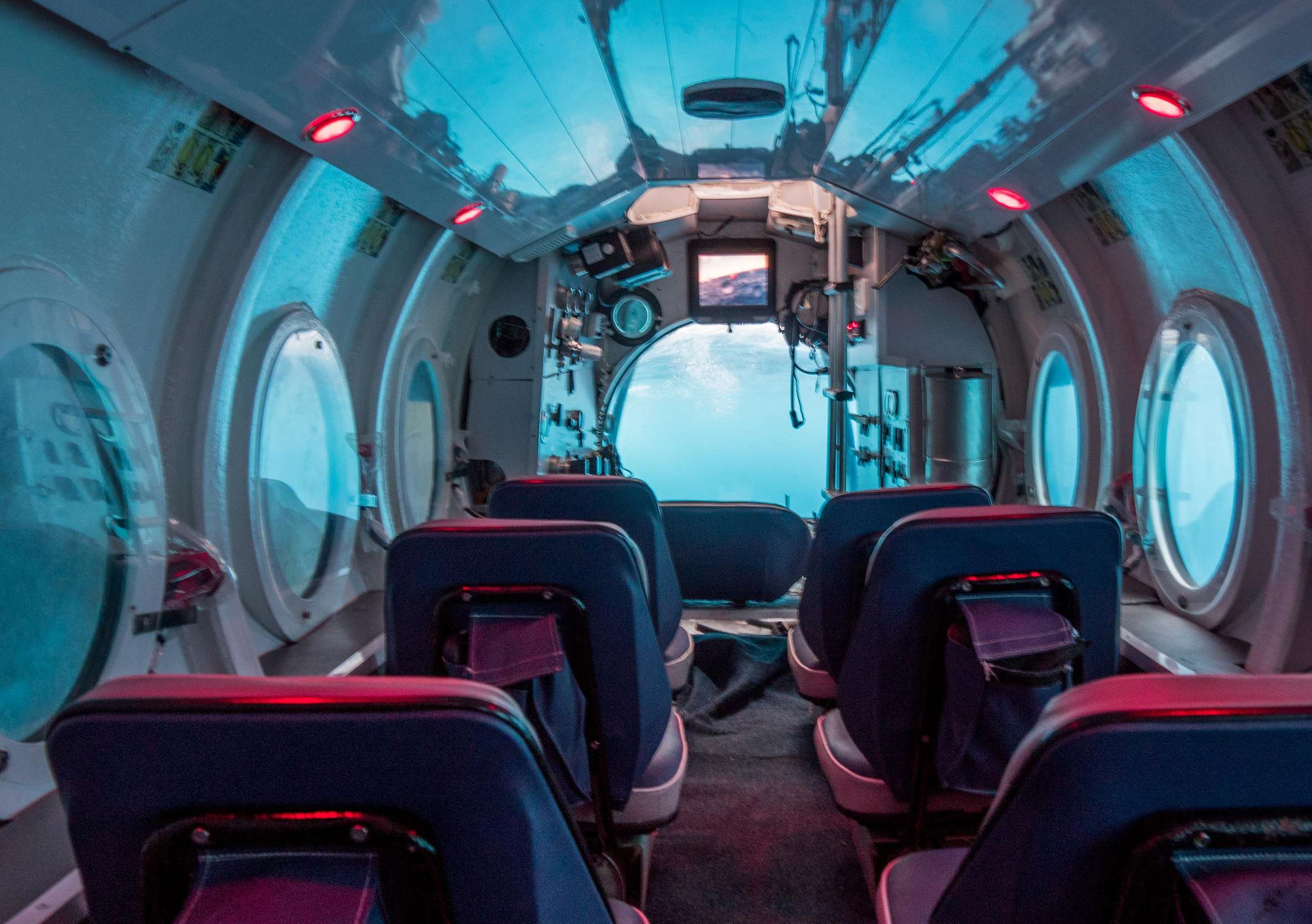
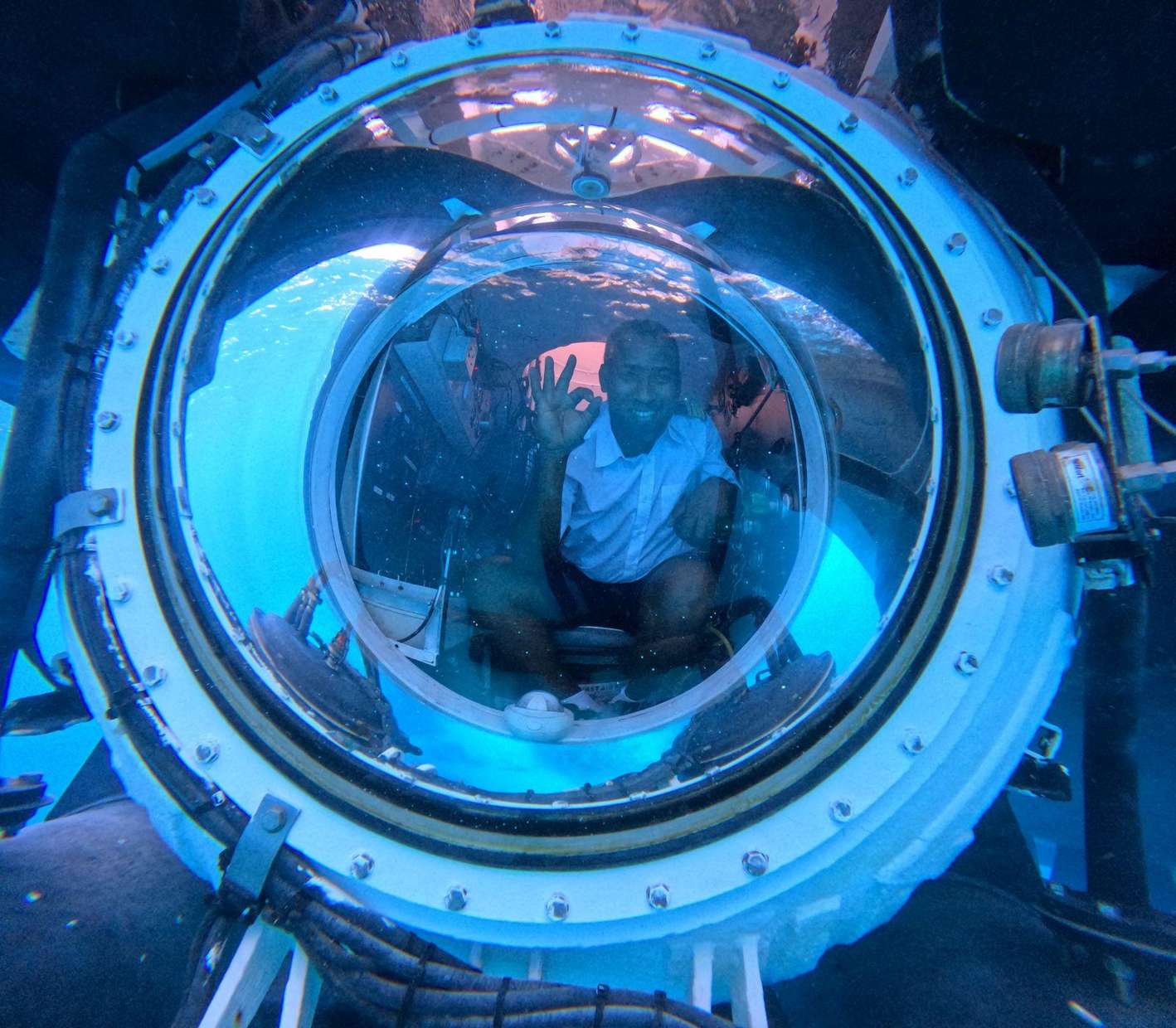
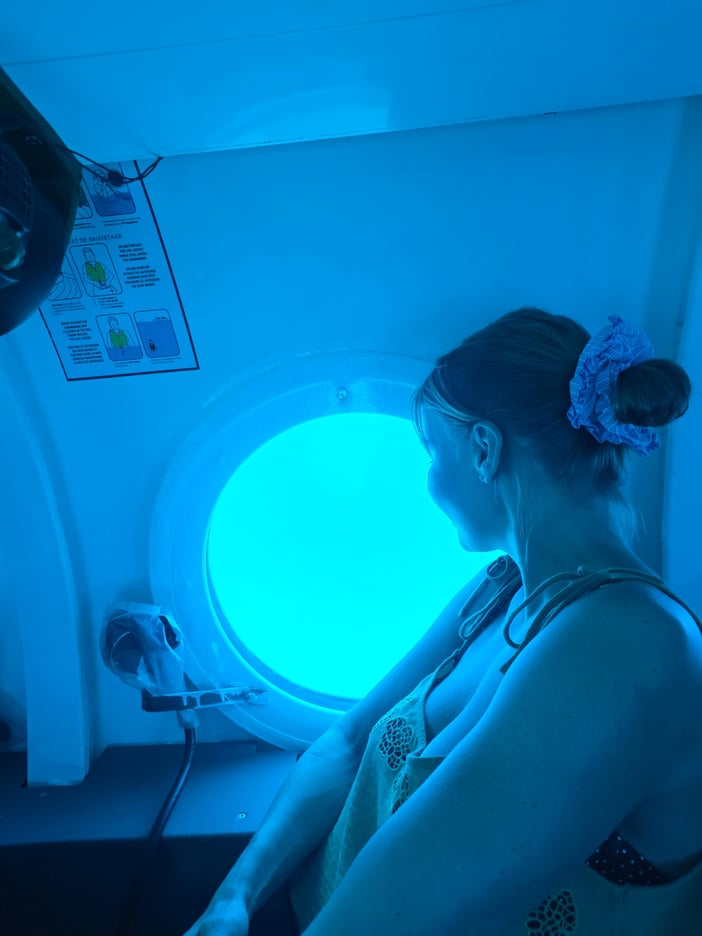
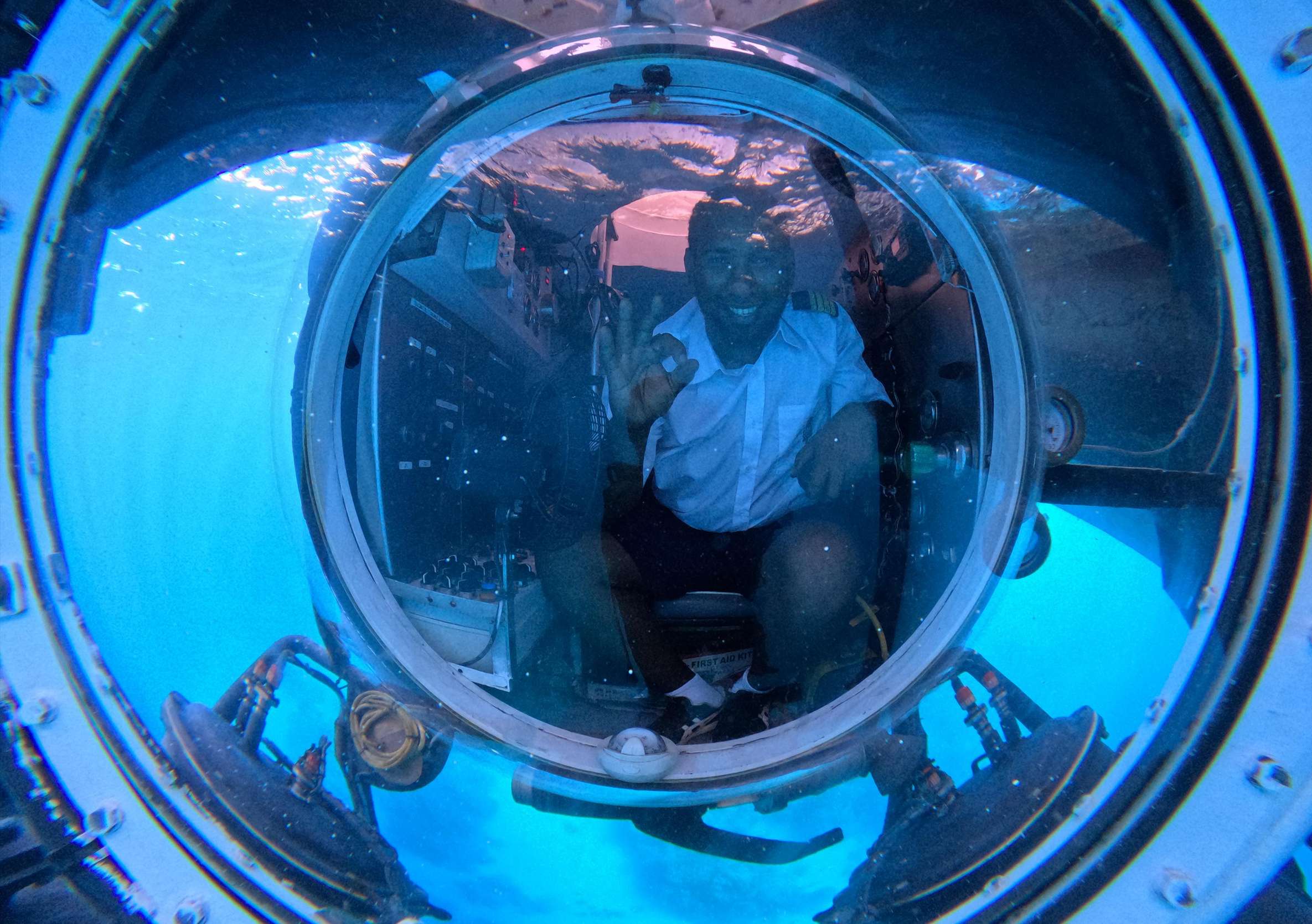
You watch it all from a dry, air-conditioned cabin that seats ten passengers and a pilot.
The dive itself runs 40 minutes inside a two-hour outing. Two of the three submarine tours on this page include hotel pickup, while the Trou-aux-Biches tour suits travelers with a rental car who meet at the dive center. Everyone comes home with a personal dive certificate, and iced tea waits when you surface.
1Welcome and briefing· 15 minStaff check you in at the dive center on Coastal Road in Trou-aux-Biches and run through the safety briefing before you board.2Boat to the platform· 10 minA short scenic boat ride carries you from the meeting point out to the offshore submarine platform.3Down the ladder· about 20 minYou climb down a two-meter vertical ladder into the cabin, which stays dry, air-conditioned and at normal pressure all dive.4The 40-minute dive· 40 minThe submarine descends to 35 meters, where surgeonfish, kingfish and capitaine glide past coral reefs outside your window.5Star Hope wreck· included aboveThe pilot brings you close to the famous Star Hope shipwreck and the historic 17th-century sheet anchor resting on the seabed.6Back ashore· about 35 minThe boat returns you to Trou-aux-Biches, where iced tea and your personal dive certificate round off the morning.
Included
Submarine ride to Star Hope wreck and 17th-century sheet anchor40-minute dive in a submarine at 35 metersCertificate for diving in a submarineIced tea
Not included
Hotel pickup and drop-offTips (optional)
Travelers who swapped the underwater waterfall for the dive - reviews
Most reviewers, five of them, call it a once in a lifetime experience and tell you to stop thinking and book.
Best surprise
Many did not expect the cabin to feel so cool and calm, with turtles and a shipwreck drifting past the portholes.
Most common wish
Several wished they had booked with transfers included, after rushing to reach the meeting point by taxi in time.
How to book a submarine dive instead of an underwater waterfall tour
01
Pick your date first
Choose a day early in your trip and take the first slot of the morning, which usually leaves at 8 am or 8:30 am. The sea is calmest then and you keep spare days for rescheduling.
Pro tipBook for day one or two of your stay, so a rough-sea postponement still fits your holiday
Common mistakeLeaving the dive to your last morning, when a cancellation leaves no second chance
02
Choose how you get there
Pick the Trou-aux-Biches tour if you have a rental car or stay nearby, since you meet at the dive center yourself. The two other listings include hotel pickup, which suits travelers without a car.
Common mistakeBooking the meet-on-site tour without transport, then discovering buses from Flic-en-Flac or Le Morne take two hours or more with a change in Port Louis
Pro tipA taxi or rental car from Flic-en-Flac takes about 56 minutes, so time your drive against the departure slot
03
Pay and check your voucher
Book through the marketplace with a bank card, then watch for the confirmation and any messages from the operator by phone, WhatsApp or email. You can cancel up to 24 hours before for a full refund.
ImportantKeep the voucher on your phone and check spam, since operators reach you through messaging apps when plans change
04
Arrive at the dive center
Head to the check-in desk on Coastal Road in Trou-aux-Biches, at the same site as the restaurant Le Pescatore. The whole outing runs two hours: a briefing, a shuttle boat to the platform, 40 minutes underwater and the ride back.
RecommendedWear flat shoes with grip, because you climb down a vertical ladder into the cabin, and leave the high heels behind
05
Know the rules before you go
Babies under 9 months cannot board, and the tour does not suit people with heart problems or severe claustrophobia. The cabin stays dry and air-conditioned at normal pressure, so no swimwear is needed.
ImportantThis is a health and age rule that can stop you boarding, so settle it before you pay, not at the dock
Pro tipMotion sickness comes only from the shuttle boat ride, not from the dive itself, because the sea below is far calmer than the surface
What to know before booking your dive in place of the underwater waterfall trip
Can stop the dayGood to knowGood news
01
ChoosingWhat it is, who it suits, when to go
6
The ladderCan stop the day
Getting in means climbing down a two-meter vertical ladder into the hatch, so you need steady legs and full mobility. People with mobility impairments cannot join the dive, and the cabin cannot take anyone taller than two meters.
Photos
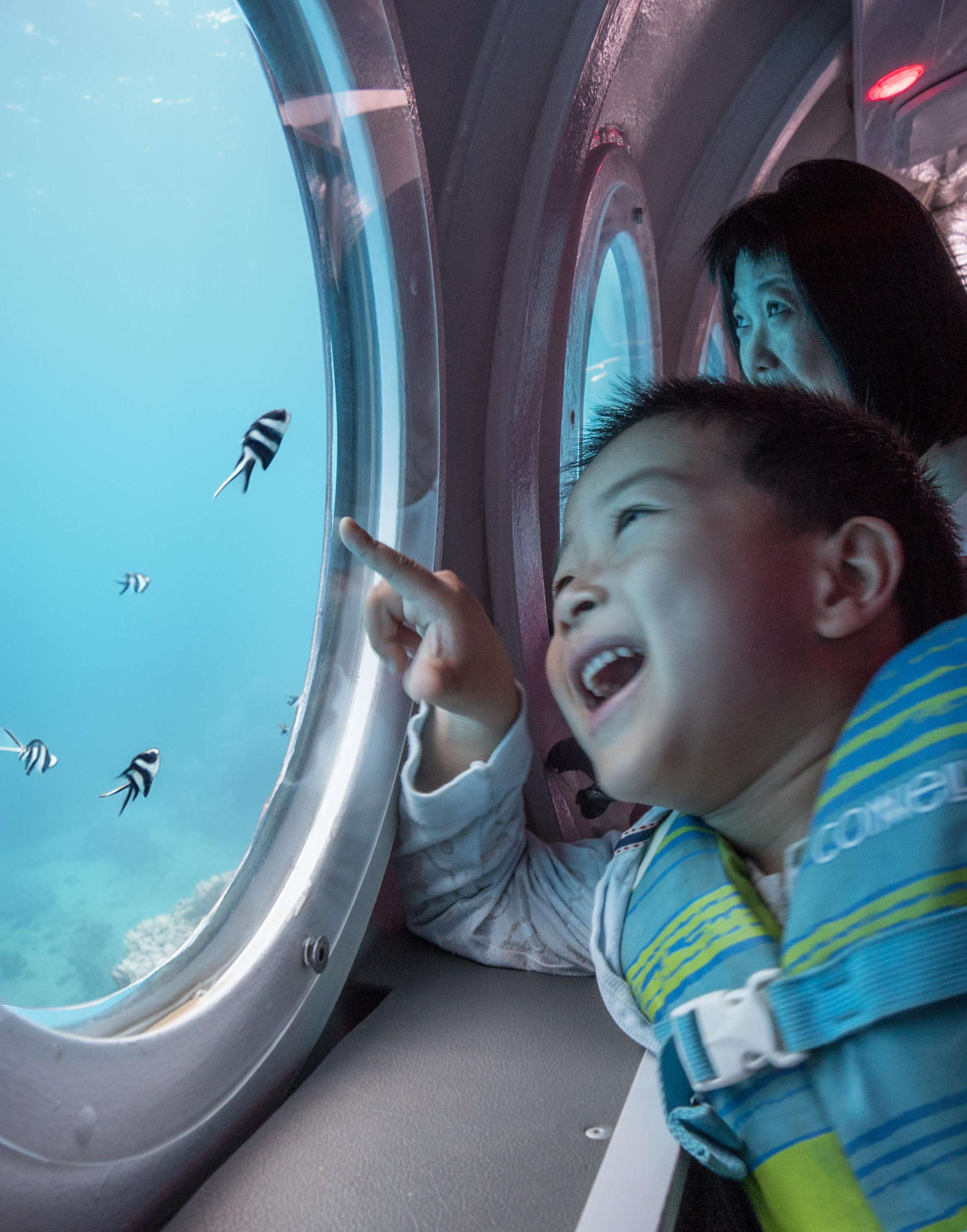
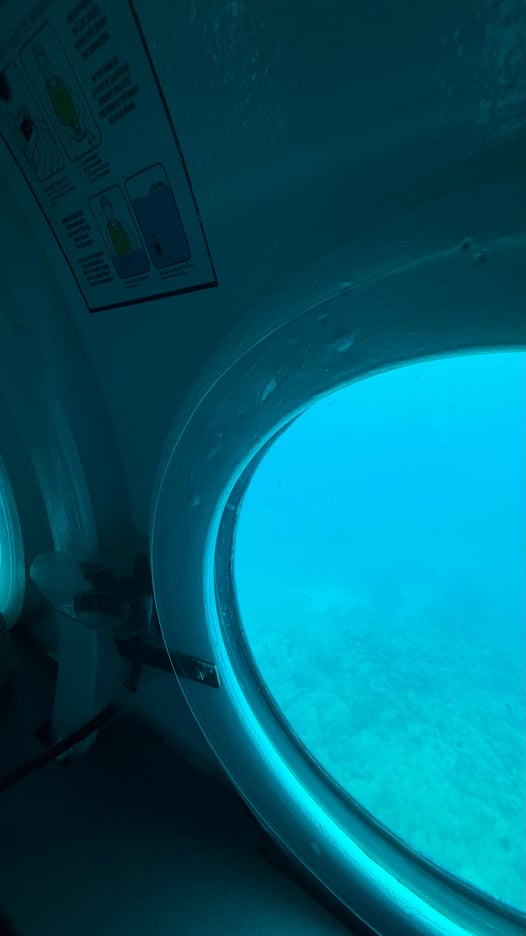
Cameras and phones are welcome inside, and every passenger gets their own observation window. Turn the flash off before the descent, since it reflects on the portholes and ruins the shot.
Timing
The whole outing takes about two hours: a briefing ashore, a 15-minute boat transfer, a 40-minute dive at 35 meters, and the ride back. Operators suggest booking it for the first day of your stay, which leaves room to reschedule if the sea turns rough.
Motion sickness
Once the submarine is underwater, seasickness stops being an issue, because it glides through water far calmer than the surface. The choppy part is the shuttle boat ride and the boarding, so if you are prone, take your remedy before that.
Group size
A real passenger submarine takes ten divers plus the pilot, so you share the cabin with a small group. Everyone sits at a viewing port, and video screens show the descent as it happens.
Included
Your booking covers the submarine ride to the wreck and the 17th-century anchor, the 40-minute dive, a personal dive certificate and an iced tea. Hotel pickup and drop-off are not included on the Trou-aux-Biches tour; the other two submarine tours do include transfers.
02
BookingHow far ahead, and what happens if plans change
2
Weather
Rain and strong easterly winds do not stop the dives, because the west coast site stays sheltered. Heavy swell from the south through southwest can force a cancellation, and in that case you get a full refund or a new slot.
Cancellation
You can cancel up to 24 hours before departure for a full refund, so a change of plan costs you nothing if you tell them a day ahead.
03
Before you goPapers, health, what to bring
2
Age and healthCan stop the day
Babies under 9 months cannot board, and the dive is not suitable for people with heart problems. Severe claustrophobia is a reason to skip it too. Alcohol before diving is prohibited.
What to wear
The cabin is air-conditioned and completely dry, so ordinary comfortable clothes are what you want; swimwear can stay at the hotel. Flat shoes with good grip are required for the ladder, and high heels, long unslit dresses and saris are out.
04
On the dayWhere to be, when, and how you get there
1
Meeting point
Check-in happens at the dive desk on Coastal Road in Trou-aux-Biches. From there, a short shuttle boat ride takes you out to the submarine platform offshore. The Star Hope Wreck tour has no hotel pickup, so arrange your own transport if you choose that one.
05
During the tourWhat is expected of you
1
Tipping
Tips for the crew are optional and never expected. If you want to show appreciation, cash in Mauritian Rupees given at the end of the trip is the usual way.
Underwater waterfall guide - what to see instead
The famous cascade off Le Morne is drifting sand lit by the sun, and it only shows from the air. What you can book instead is a 35-meter submarine dive, and this guide settles which one and when.
Trou-aux-Biches
If you only remember three things
1
The underwater waterfall is drifting sand, not falling water, and only a flight over Le Morne shows it.
2
Never swim, boat or kayak over the channel: the rip currents there have been fatal.
3
Book a submarine dive for the first day of your stay, so a rough sea leaves room to rebook.
Is the underwater waterfall real, and can you visit it?
Off Le Morne, at the southwestern tip of the island, the ocean seems to pour off the edge of the reef into a deep blue trench.
The underwater waterfall is an optical illusion: sand and silt washing down a submarine slope, lit by the sun. The water is not falling anywhere. Mauritius is not sinking, and nothing drops into a void.
The spectacle is real enough to have circled the world, and that is exactly why you searched for a tour of it.
What you find instead are three submarine dives off Trou-aux-Biches on the north-west coast, each taking you 35 meters down in a dry, air-conditioned cabin to a coral reef and the Star Hope shipwreck.
Seeing the deep with your own eyes, photographing it, and ticking off something extraordinary: those are the three measures every dive on sale gets judged by, and the chapters ahead weigh each one.
Tour for this
Trou-aux-Biches: Submarine Tour to the Star Hope Wreck4.7★ (204) · 2 hours · Free cancellation
Why a boat or the beach cannot show you the underwater waterfall
Stand on Le Morne beach and look out: nothing. The illusion depends on angle. Sand sliding over the reef edge into deep water reads as a waterfall only from the air, several hundred meters up, with strong sunlight behind it. From sea level, or from underwater, the eye simply cannot piece the picture together.
That is also why swimming out will not help, and why the question of safety is not academic. The rip currents over the channel have been fatal. Heavy swells break over the barrier reef and push water violently back out to sea across the exact patch the photographs show.
Rip currents off Le Morne
The rip currents over the underwater waterfall channel off Le Morne have been fatal, swimming, boating or kayaking out over it is unsafe, and no sea-level viewpoint exists
So the beach gives you the mountain, the lagoon and a story to tell, and the water gives you nothing but risk. The sight belongs to the sky, several hundred meters up. The deep water itself waits on the other side of the island, where a real submarine can take you into it.
Famous underwater waterfall views, up close from the sub
The first thing you wanted, watching the cascade happen in front of you, has no match on sale here, and the guide will not pretend otherwise. What comes nearest is the Trou-aux-Biches: Submarine Tour to the Star Hope Wreck, the dive this page leads with.
You go down 35 meters in a genuine passenger submarine, ten seats plus a pilot, and watch the reef, the fish and the wreck pass your own observation window.
The dive runs off the north-west coast, far from the sand cascade in the southwest, and it takes you into the deep blue water the illusion only hints at, seen from inside it, with no diving lesson or wet suit. You stay dry the whole time.
One honest note on where else deep water might be reached: underwater boats and semi-submarines keep no scheduled departures along the southern or eastern coasts, so Le Morne's side of the island offers no underwater vessel at all.
The north-west is where the diving happens. If seeing the deep up close matters most, this two-hour dive is the bookable way to do it.
Tour for this
Triolet: Submarine Dive with Hotel TransfersValid 1 day · Hotel pickup · Free cancellation
Your underwater waterfall photo, taken from inside the dive
For the picture, the rules are few and strict. Sunlight does the work: the contrast between pale sand and dark trench only reads when the sun sits high, roughly between 10:30 am and 1:30 pm, at its best around 11:30 am to 12:30 pm.
Under cloud the whole effect washes out. A polarizing filter, if the aircraft allows one, cuts the surface glare that hides the gradations in the water.
What you wear matters more than people expect. Light and bright clothing bounces off the aircraft window straight into the frame.
Pro tipWear dark, muted tones such as black, navy or charcoal on any flight, white, light and neon colors reflect off the aircraft windows straight into your photos.
That aerial shot takes its own planning, and the notes above carry you most of the way there.
The submarine gives photography a second act: the Trou-aux-Biches: Submarine Tour to the Star Hope Wreck gives every passenger a personal observation porthole to shoot through, with fish, coral and a 17th-century anchor on the other side of the glass. Just remember to turn the flash off, or the portholes reflect it back at you.
The underwater waterfall wish, answered by a 35-meter dive
The last thing on your list was a natural wonder worth the flight. Here the trade pays off on its own terms.
Mauritius: Submarine Dive Experience takes you 35 meters into the Indian Ocean in a real passenger submarine, no dive experience needed, to a coral reef alive with tropical fish and the Star Hope shipwreck resting on the seabed.
Think about what that is. A pressurized, air-conditioned cabin descending past the light line, a school of surgeonfish crossing your window, a ship that went down centuries ago. Few travelers on any island can say they have done it, and you walk away with a dive certificate to prove it.
The honest note: the dive happens off the north-west coast, and the sand illusion stays in the southwest, so one wonder takes the place the other leaves open.
On logistics this version includes pickup and drop-off, shuttle boat transfers, the briefing, refreshments and the certificate in one two-hour outing. For a first submarine, that is an easy yes.
Timing decides what you see down there. The clearest stretch runs from November through April, when the trade winds drop and visibility around the reefs often passes 20 meters. December is the standout month: calm water on about three days in four, and hardly a windy day.
From May to October the story flips. Steady southeast trade winds of 18 to 25 knots stir up chop and pull visibility down. Summer rain from January to March can cloud the inshore lagoons for a while after a storm, though the outer reefs stay clear.
Water Clarity, Waves, and Wind at Le Morne Lagoon
December offers optimal water clarity with zero windy days, warm 27°C sea temperatures, and calm water on 75% of days.
HighestFeb to Mar, Nov to Dec63 to 75% of days
In betweenJan, Apr, Sep to Oct51 to 62% of days
LowestMay to Aug39 to 45% of days
Darker months: higher, from 39 to 75% of days
Tap a month to read it.
May: waves up to 1.7 m on an average day. Trade winds begin picking up to 18-25 knots and waves average 1.7 meters, making the lagoon surface choppier despite mostly dry weather.
HighestMay to Sep1.6 to 1.7 m
In betweenJan, Apr, Oct1.5 m
LowestFeb to Mar, Nov to Dec1.3 to 1.4 m
Darker months: higher, from 1.3 to 1.7 m
Tap a month to read it.
May: 2.8 windy days. Trade winds begin picking up to 18-25 knots and waves average 1.7 meters, making the lagoon surface choppier despite mostly dry weather.
HighestFeb, Apr to Jul2 to 2.8 days
In betweenJan, Aug1.6 days
LowestMar, Sep to Dec0 to 0.8 days
Darker months: higher, from 0 to 2.8 days
Tap a month to read it.
July: 26.6 dry days. Strong trade winds and 1.6-meter waves create choppy lagoon waters better suited for kitesurfing than clear viewing.
HighestMay to Oct21.2 to 26.6 days
LowestNov to Apr8.8 to 14.4 days
Darker months: higher, from 8.8 to 26.6 days
Tap a month to read it.
Read the two seasons together and the choice is simple: November to April for glassy water, May to October for lower prices and a sea that behaves as long as you go early. Hour of day matters too.
Morning water is flattest before the sea breeze arrives around 10 am, and the sun reaches its steepest angle between 11:30 am and 12:30 pm, when light cuts straight through the surface instead of glancing off it.
Sunlight hours and midday low-reflection window at Le Morne
13h 04m of daylight
123
00061218245:23 am sunrise6:27 pm sunset
110 am High sun window begins211:55 am Solar noon peak32 pm High sun window ends
DarkDaylightSunrise and sunset, averaged for Nov
Either an early slot or a midday one, never the windy afternoon in between. An early departure around 8 am grabs the flat, clear conditions operators pick on purpose; a midday slot trades a choppier surface boat ride for the sharpest colors through your porthole.
The Mauritius: Submarine Dive Experience wraps the same dive in hotel pickup, shuttle transfers, refreshments and crew for travelers who want everything arranged. The Triolet: Submarine Dive with Hotel Transfers goes furthest on logistics, collecting you from any hotel or villa across the island, which earns its keep when you stay somewhere remote.
Choosing your submarine dive
Trou-aux-Biches Star Hope tour
Submarine Dive Experience
Triolet dive with transfers
Getting there
You meet at the dive center in Trou-aux-Biches
Hotel pickup and drop-off included
Island-wide hotel and villa transfers included
Best for
Independent travelers with a car
An all-organized two-hour outing
Guests at remote accommodation without transport
The dive
40 minutes at 35 meters to the Star Hope wreck
40 minutes at 35 meters with crew and briefing
40 minutes at 35 meters with large viewing windows
Extras
Iced tea and dive certificate
Refreshments and dive certificate
Refreshments and personalized certificate
Verdict
The closest match to this page's search
The easiest full-service dive
The most hands-off option
Trou-aux-Biches Star Hope tour
Getting there
You meet at the dive center in Trou-aux-Biches
Best for
Independent travelers with a car
The dive
40 minutes at 35 meters to the Star Hope wreck
Extras
Iced tea and dive certificate
Verdict
The closest match to this page's search
Submarine Dive Experience
Getting there
Hotel pickup and drop-off included
Best for
An all-organized two-hour outing
The dive
40 minutes at 35 meters with crew and briefing
Extras
Refreshments and dive certificate
Verdict
The easiest full-service dive
Triolet dive with transfers
Getting there
Island-wide hotel and villa transfers included
Best for
Guests at remote accommodation without transport
The dive
40 minutes at 35 meters with large viewing windows
Extras
Refreshments and personalized certificate
Verdict
The most hands-off option
Every one of them delivers the same core: a real submarine, real depth, a real wreck.
Tour for this
Triolet: Submarine Dive with Hotel TransfersValid 1 day · Hotel pickup · Free cancellation
Getting to the underwater waterfall substitute dive in Trou-aux-Biches
The dive runs from the north-west coast, and from most resort areas that means a real journey. A private taxi, rental car or prearranged hotel transfer is the only reliable way to arrive in time for a scheduled departure.
By road it runs about 56 minutes from Flic-en-Flac, roughly an hour from the north, and around 88 minutes from Le Morne.
The bus is the false economy. There is no direct service from Flic-en-Flac or Le Morne; you change in Port Louis between two separate terminals, route 123 to Victoria Square, then route 20, 20C or 82 up to Trou-aux-Biches.
That adds up to well over two hours each way, and up to three hours from Le Morne.
Getting to Trou-aux-Biches
Rental carAbout 56 to 88 minutes from the main resort areas, no traffic
Easy
Private taxiThe same direct drive, no parking to think about
Easy
Prearranged hotel transferEffortless, but fixed to the operator's times
Easy
Public busNo direct route; a transfer in Port Louis means well over two hours each way
No access
Staying near Trou-aux-Biches changes everything: the dive center is a short hop away, and the morning departure stays easy.
Driving yourself
Rent a car for the driveCompare cars from the rental companies in one search, then pick yours.
A day on the submarine dive that stands in for a Mauritius underwater waterfall tour
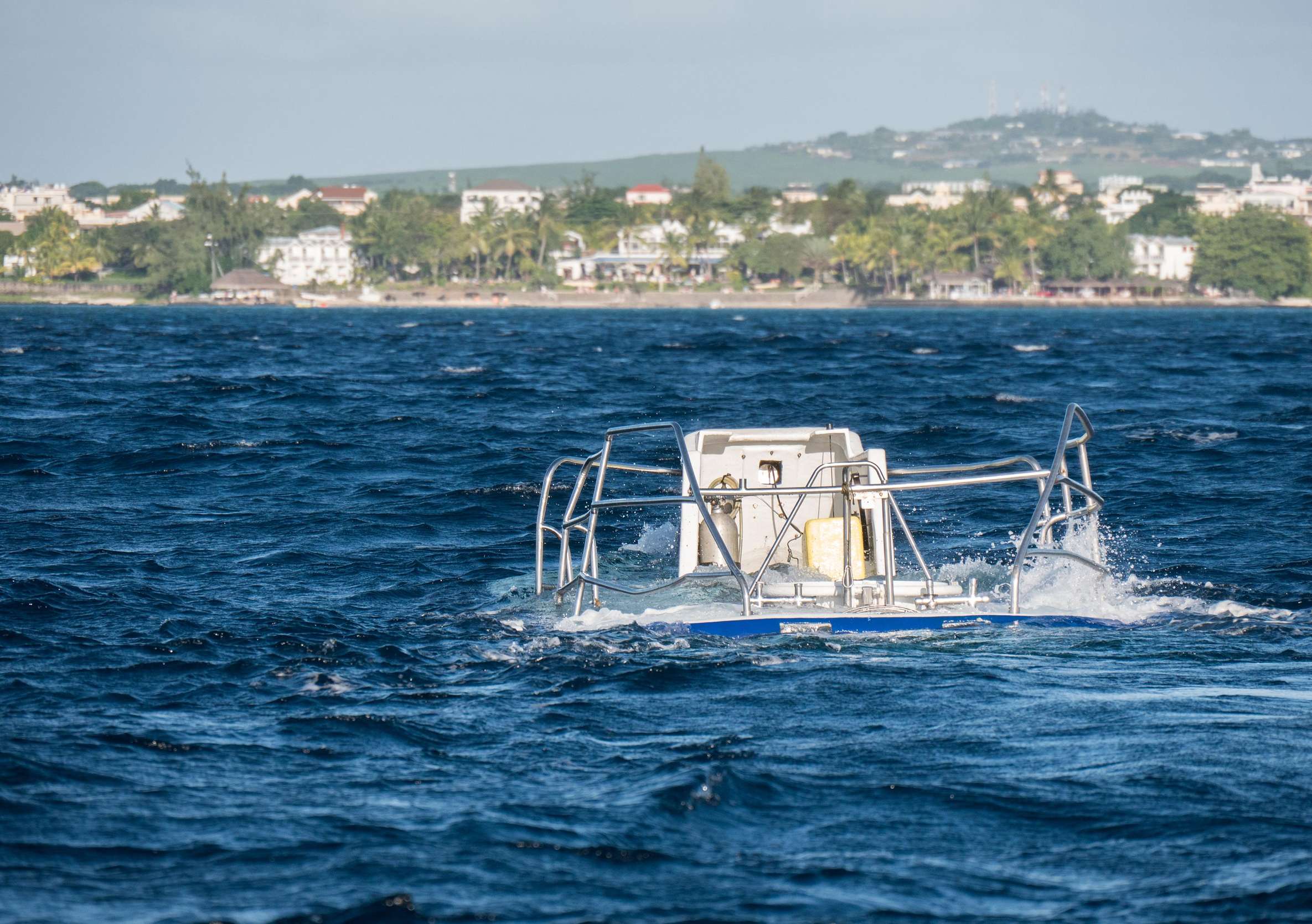
Check-in happens at the desk on Coastal Road in Trou-aux-Biches, at the same site as the restaurant Le Pescatore. A welcome drink, a 15-minute briefing on shore, and then the small boat out to the platform where the submarine sits on the surface.
Your two hours, in order
1
Arrival and welcome
Check-in at the desk on Coastal Road, welcome drink
The site doubles as a restaurant, so arrive unhurried
2
Briefing
15 minutes on shore
Safety talk before any boat ride
3
Shuttle boat
10 to 15 minutes out to the offshore platform
Can be choppy, the one bumpy stretch of the day
4
The dive
40 minutes down at 35 meters
Reef, tropical fish, the Star Hope wreck
5
Return
Boat back to land
Done inside two hours door to shore
The boat ride is the only part where motion matters. The sea between the pier and the platform can bounce you around, and queuing to board while the submarine rocks is what unsettles stomachs.
Once the hatch closes and the submarine submerges, all of it stops: underwater the water is far calmer than the surface, and the cabin barely sways. The motion sickness ends where the boat ride ends. People who feel ill on dive boats usually find it fades the moment they go under.
And if the quiet worries you, the engineering should settle it. The vessel carries duplicated oxygen and air systems, backup power, individual breathing gear, and can surface in under a minute by any of eight independent methods, with days of emergency life support on board.
What to wear and who can join the underwater waterfall dive swap
Nobody gets wet. The cabin is air-conditioned and stays at normal surface pressure the whole way down, so there is no ear-popping and no need for swimwear: ordinary comfortable clothes are right.
The one physical demand is the ladder. Climbing down the two-meter vertical hatch into the cabin takes flat, grippy shoes; long unslit dresses, saris and heels are out, because they catch on the rungs.
ImportantFlat shoes with grip, not sandals with a heel strap; the two-meter ladder into the hatch is the one physical test of the day.
Cameras and phones come along, with the flash switched off so the portholes do not mirror it back. Alcohol before diving is prohibited.
The honest limits: babies must be at least 9 months old, everyone aboard has to manage the boat transfer and the ladder, and the cabin does not fit anyone taller than 2 meters.
Tours are not suitable for people with heart problems, and severe claustrophobia makes the enclosed cabin a poor match. Anyone with a respiratory condition should think carefully before booking. For everyone else, from non-swimmers to grandparents, the dive asks nothing but steady legs on a ladder.
If the sea turns on your underwater waterfall dive day
The fear is paying for a day the ocean cancels. The reality is narrower than most visitors expect. Rain does not stop the dive, and neither does strong wind: the site sits on the sheltered west coast, where easterly winds of 70 to 80 km/h still leave conditions workable.
What stops it is the sea: heavy swells running in from the south-southwest through north-northwest make boarding unsafe or cloud the water, and a cyclone warning suspends everything maritime.
Those days are rare enough that the practical move is simple: book the dive for early in your stay, so a cancellation still leaves you days to rebook.
When the weather intervenes
If this happens
What happens then
Rough seas or heavy swell force a cancellation
The dive is rescheduled to another day, or you get a full refund if cancelled before departure
Cyclone warning comes into force
All maritime activities are suspended until it lifts
The route to the wreck is blocked by conditions
The dive route gets adapted where conditions allow
You cancel yourself
Cancel up to 24 hours in advance for a full refund
The tours' own terms carry the guarantee: cancel up to 24 hours ahead for a full refund, and an operator-side cancellation for weather costs you nothing.
Other underwater sights around your underwater waterfall dive
Once the submarine is booked, the island offers ways to fill the same appetite at different depths. An underwater sea walk puts a helmet on your head and air pumped from the surface, so you walk upright on the seabed with your face dry, no certification needed; non-swimmers do it happily.
It runs at Grand Baie on the north coast and at Île aux Cerfs on the east.
A subscooter sits between the two: you ride a shared transparent dome three meters above the sand for about 35 minutes, breathing normally, with a guide alongside and an alarm button if you want them closer.
Glass-bottom boats and catamaran cruises round it out, the latter pairing snorkeling stops, dolphin watching and a beach barbecue on a full day out.
Families with toddlers or relatives who cannot manage the submarine ladder get a real option here too: semi-submarine-style boats with shallower viewing and walk-down steps suit young children and limited mobility far better than a vertical ladder.
Match the vessel to the group, and let the depth follow. The 35-meter dive is the headline; the rest is what keeps the whole travelling party in the water story.
More to book around Trou-aux-Biches
Live dates and prices
A traveler's note
We went with our 2-year-old and got a welcome drink. After the briefing, the boat took us to the submarine. Our little one found it so exciting. Great weather and lots to see underwater.
The underwater waterfall is worth knowing about and impossible to book from the water. If the deep ocean itself is what you are after, the Trou-aux-Biches Star Hope submarine dive delivers it in two dry, comfortable hours, best in the December-to-April calm or on an early morning departure.
Go ifYou want to see the deep ocean up close without dive trainingYou are travelling between November and April, or can take an 8 am slotYou have a car, a taxi or hotel pickup arranged for the north-west coast
Skip ifSomeone in your group cannot climb a two-meter vertical ladderA traveler has severe claustrophobia or a heart conditionYou only want the sand illusion itself, which requires an aerial flight arranged independently
Our pick to book
Trou-aux-Biches: Submarine Tour to the Star Hope Wreck4.7★ (204) · 2 hours · Free cancellation
Underwater waterfall FAQ - the questions readers ask before they book
Straight answers on what the illusion is, how to see it, and what to book instead.
Trou-aux-Biches2026
The waterfall only shows from the sky, and today the light is perfect between 11:30 am and 12:30 pm. Book your flight slot, then take the submarine down to the wreck.
Is the underwater waterfall in Mauritius real?
The cascade is an optical illusion. Sand and silt wash down an ocean trench off Le Morne, at the island's southwestern tip, and from the air the drift looks like falling water. Mauritius is not sinking and nothing is plunging into a void.
Can you see the underwater waterfall from a boat or while swimming at Le Morne?
No. The effect only reads from the air, from a seaplane or helicopter, because it depends on the color contrast between shallow sand and the deep drop-off. At sea level or underwater you would see nothing of it.
Is it dangerous to swim near the underwater waterfall?
Swimming, boating or kayaking out over the channel is unsafe. Heavy swells break over the barrier reef there and push strong outflowing rip currents. Keep to the beach inside the lagoon and view the illusion from a flight instead.
Is the underwater waterfall visible on cloudy days?
Barely. The illusion needs strong sunlight to set shallow sand against deep blue water, so overcast skies wash the contrast out. It shows best between 10 am and 2 pm on bright days, and flights stay grounded when cloud sits low over the mountains.
Can I fly a drone from Le Morne beach to photograph it?
Not from the beach. Recreational drones may only fly over private property with the owner's permission, and public areas and beaches are off limits. The reliable way to get the photo is a seat on a scenic flight.
What can I actually book here instead of a flight?
The submarine dive off Trou-aux-Biches. A real passenger submarine takes you 35 meters down for a 40-minute look at coral reefs, tropical fish and the Star Hope shipwreck, all from a dry, air-conditioned cabin. It cannot show you the illusion, but it gets you far closer to a living reef than any aerial photo.
How long does the submarine dive take from start to finish?
Count on about two hours door to door at the coast. That covers a welcome and briefing on shore, a short shuttle boat ride to the offshore platform, 40 minutes submerged at 35 meters, and the ride back.
Does the submarine tour include hotel transfers?
It depends on the tour. The Trou-aux-Biches dive to the Star Hope wreck asks you to meet at the dive center, which suits travelers with a rental car, while two other submarine tours on this page include pickup. Taxis need cash, so plan for that if you drive yourself.
Do submarine dives get cancelled because of bad weather?
Rain and strong easterly winds rarely stop the dive, since the site sits on the sheltered west coast. Rough seas with heavy swells can force a cancellation, and you then get a reschedule or a full refund. Booking the dive early in your stay leaves room to move it.
What should I wear and bring on the submarine?
Comfortable clothes and flat shoes with good grip, because you climb down a ladder into the hatch. Leave heels, long unslit dresses and swimwear behind; the cabin stays dry. Cameras and phones are welcome with the flash off, since flashes reflect on the portholes.